Civil Engineering Technician 

By integrating science and engineering concepts with industry-specific technologies, civil engineering technicians assist in the construction and maintenance of infrastructure projects, such as roads, bridges, buildings and water supply systems.

Home / Learn / Programs List / Civil Engineering Technician 
Credential
Ontario College Diploma
Duration
Four semesters
Start Date(s)
January (Winter)
September (Fall)
Locations
Belleville
Open to
International Students
Domestic Students
CIP Code
15.0201

Find your career

Our graduates are employed by: 

  • Construction contractors
  • Engineering consulting firms
  • Government agencies (such as transportation and public works departments)
  • Architectural and engineering services firms
  • Utility companies
  • Environmental and geotechnical consulting firms

Prepare for high-demand positions in:

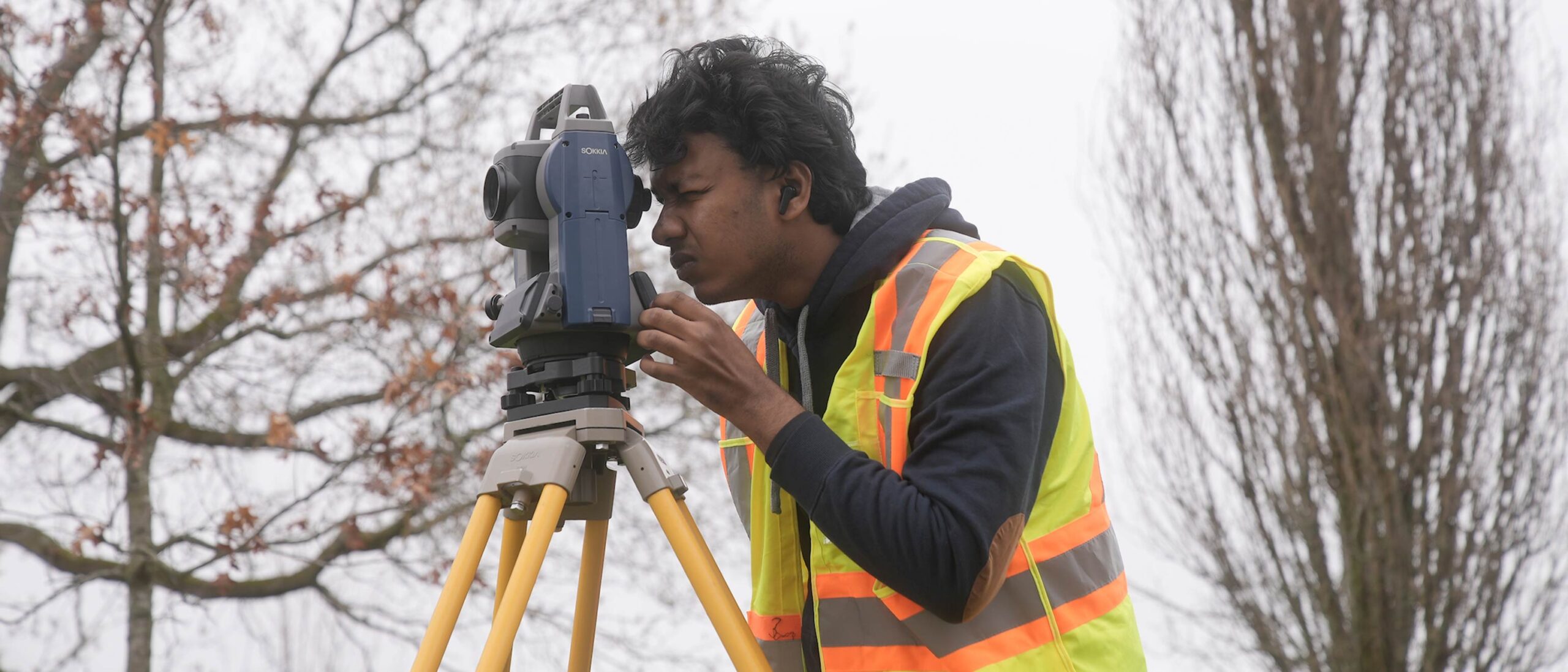
  • Conducting surveys and performing field investigations to gather data and information for design purposes.
  • Utilizing computer-aided design (CAD) software to create detailed drawings and models.
  • Inspecting and evaluating project sites for compliance with safety and environmental regulations.
  • Conducting on-site quality assurance.
  • Graduates are eligible for certification with the Ontario Association of Certified Technicians and Technologists (OACETT) as C-Tech.

Our grads get great jobs

  • Road construction inspection
  • Building inspection
  • Structural drafting for construction companies
  • Site inspection for consulting engineering companies
  • Quality assurance for consulting engineering companies

Is it for you?

This career holds rewarding opportunities for students who:

  • Like to know how things work.
  • Are passionate about making a lasting difference in the community.
  • Are good at visualizing problems to tackle solutions.
  • May prefer the option to work indoors or outdoors.
How you'll learn

Experiential learning

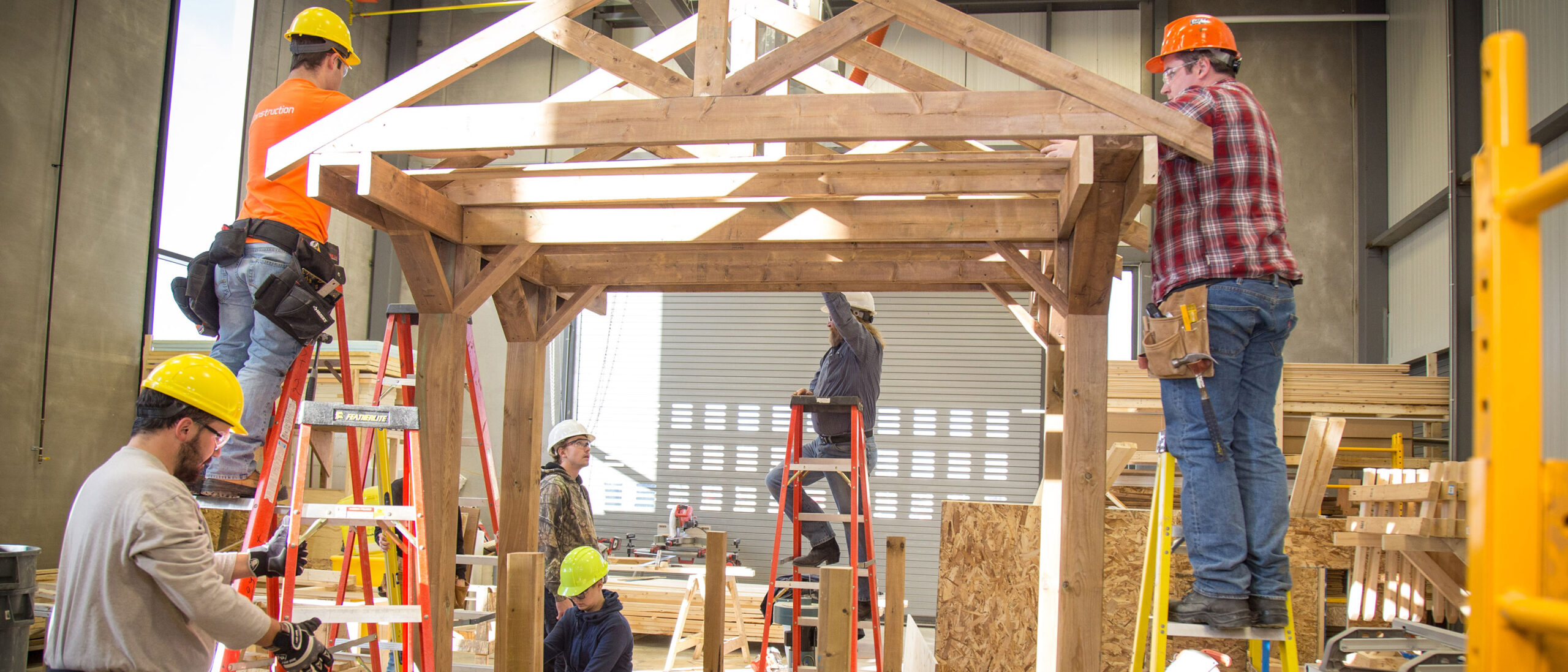
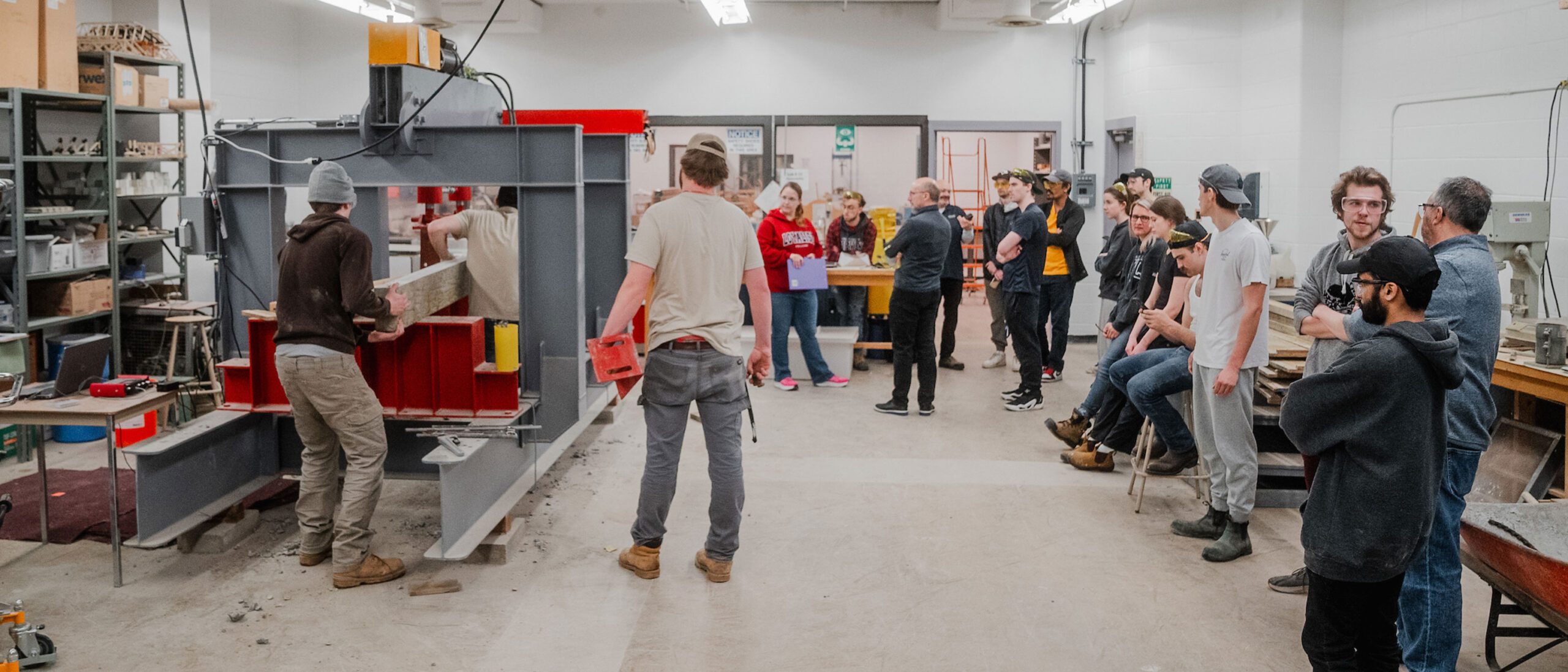
This well-rounded program combines classroom instruction and hands-on learning, both outside (in the field) and inside, in our building sciences lab using industry-standard equipment.

  • Through a combination of theory and hands-on training, prepare for a rewarding career assisting civil engineers in designing, planning and managing projects that improve communities and enhance quality of life.
  • Get a solid foundation in surveying techniques, drafting principles and computer applications, using programs such as AutoCAD and AutoCAD Civil 3D and ArcGIS.
  • Gain skills in structural, municipal and highway design, drafting, materials testing, surveying, inspection, construction supervision and project estimating, to name a few.
  • Apply engineering theories in our industry-standard materials testing facility.
  • Year one is common with the Construction Engineering Technician program, allowing for ease of transfer.
  • Obtain the academic requirements of the Ontario Association of Certified Engineering Technicians and Technologists (OACETT) or transition to a university degree in Canada or abroad.

Courses

CONS1007 Building Methods & Materials

Students will investigate the primary materials used in the construction industry. Students will work with aggregates, concrete, wood, steel and asphalt, practicing the methods and using the equipment associated with each material.

CIVL1000 CAD 1

Students will use basic commands in drafter and design applications to create, edit, store and retrieve drawing data. Through simple drawing assignments, students will develop foundational drafting skills. Students will also interpret construction drawings to build plan-reading skills related to construction documentation.

CIVL1001 Engineering Applications

Students will apply software to solve engineering problems, improve design efficiency and support planning analysis and management of engineering projects.

CONS1002 Health & Safety-Construction

Students will learn about health hazards and safety risks present on construction sites. Students will navigate the Occupational Health and Safety Act and Regulations for Construction Projects, applying their knowledge to promote safe work environments for themselves and others.

MATH1012 Math 1

Students learn to use the mathematical tools that are required in their engineering subjects. Building sciences applications of algebra, geometry and trigonometry are emphasized.

SURV1016 Surveying

Students will be able to explain the role of the survey technician in communicating land-related information among industry stakeholders in engineering and construction. They will be able to accurately measure angles, distances and elevations, record field data and apply surveying theory while developing practical skills using automatic levels, total stations, electronic data collectors and GNSS receivers through hands-on field exercises.

CONS1009 Aggregates & Concretes

Students will become familiar with construction materials, their properties and associated testing equipment by working in a laboratory setting to conduct material testing. Students will evaluate material properties and relate findings to CSA/ASTM Standards for Testing, Ontario Provincial Standard Specifications (OPSS), Ontario Building Codes (O.B.C.) and contract requirements. Students will focus on Ready-Mix Concrete design for civil and building applications.

CIVL1003 CAD 2

Students will enhance their knowledge of drafter and design applications. Students will apply basic functions such as geometry creation, editing and dimensioning of engineering drawings. Students will also develop plan-reading skills using construction drawings. Prerequisite: CADD 1000

SURV1013 Geographical Info System

Students will be introduced to the principles and applications of Geographic Information Systems (GIS) for collecting, managing, analyzing and visualizing spatial data. Students learn how GIS supports decision-making in fields such as urban planning, civil engineering, environmental management and infrastructure development. Prerequisite: CIVL 1000

SURV1012 Heavy Construction Methods

Students will be able to describe and apply methods used in civil engineering works, including the selection and use of materials and heavy construction equipment within Ontario’s construction industry. They will be able to explain site preparation, earthwork operations, equipment use and maintenance and apply safety regulations, while evaluating sustainable construction practices and environmentally responsible materials and techniques.

CIVL1004 Highway Engineering

Students will study the geometry of Canadian highways and analyze how factors such as design speed, climate, traffic flow and vehicle characteristics influence road design. Students will calculate minimum highway radii, determine the use of transition curves, evaluate cross-section adjustments, design vertical curves and prepare documentation to guide roadway construction. Prerequisite: MATH 1012, ( SURV 1000 or SURV 1014 )

CIVL1005 Municipal Services

Students will explore the role of municipal engineering in sustainable city development, including regulatory frameworks and infrastructure maintenance practices. Students will apply basic design principles and consider environmental, economic and social factors in the planning and delivery of municipal services. Prerequisite: CIVL 1000, MATH 1012

CIVL1002 Statics

Students will analyze the effects of external forces on rigid bodies at rest. Students will examine forces and equilibrium, and apply these principles to structural elements such as trusses and beams. Prerequisite: MATH 1012 or MATH 1036 or BUSI 8164 or MATH 10001

COMM1002 Technical Communications

Students develop communication skills for the presentation of technical information in business documents that meet the needs of clients and customers. Documents and presentations are produced in Word and PowerPoint.

GNED1100 Becoming a Global Changemaker

This Loyalist College graduate attributes course will help shape your perspectives, broaden your understanding of important issues affecting our societies today, and equip you with invaluable knowledge and skills that will inform your ability to influence your community in a meaningful and impactful way. By exploring topics such as cultural competency, Indigenous education, entrepreneurship, sustainability, health and wellness, and ecological literacy, you'll be equipped with a powerful toolkit that extends far beyond the classroom.

CONS2011 Aggregates & Asphalt

Students will become familiar with construction materials, their properties and associated testing equipment by working in a laboratory setting to conduct material testing. Students will evaluate material properties and relate findings to CSA/ASTM Standards for Testing, Ontario Provincial Standard Specifications (OPSS) and contract requirements. Students will focus on the use of asphalt in municipal and provincial civil construction projects. Prerequisite: BLDG 2008 or CONS 1009

SURV2015 Engineering Surveying

This course is about engineering and construction surveying. It introduces the student to the major steps of surveying within an engineering project: setting up project control, completing topographic surveys including breaklines for terrain modeling, producing, transferring and extracting information with digital media, staking out alignment and grades for construction work. Advanced geomatics concepts such as ellipsoid, geoid, datum, projections, grids and survey adjustments are introduced. Students become proficient at using total station equipment for pickup and layout, and develop confidence in the accuracy and precision of various measuring methods. AutoCAD Civil 3D is used to develop terrain and simple road corridor design used in the stakeout. Prerequisite: ( COMP 1003 or CIVL 1001 ) , ( SURV 1000 or SURV 2014 )

CONS2005 Envir Protect Legislation Cons

Students will examine how construction activities impact the environment, including land, water, air and surrounding communities. Students will explore real-world examples to identify strategies for preventing pollution and complying with permits and regulatory requirements. Students will review environmental legislation and apply this knowledge to make informed decisions that support safe, responsible and sustainable construction practices.

CIVL2002 Highway Technology

Students will be introduced to the principles of designing, constructing and operating roads and highways in Ontario. Prerequisite: ( SURV 1001 or SURV 1014 ) , ( COMP 1003 or CIVL 1001 ) , ( CADD 1005 or CIVL 1003 )

MATH2003 Math 2

This course covers the fundamentals of differential and integral calculus. Calculus plays an important role in the understanding of science, engineering, economics, and business. This introductory calculus course covers differentiation and integration of one variable, with applications. Prerequisite: MATH 1007

CIVL2001 Strength of Materials

Students will study the concepts of stress, strain, tension, compression, shear, bending and the mechanical properties of materials as they relate to the building industry. Prerequisite: BLDG 1003 or CIVL 1002

CIVL2000 Structural Drafting

Students will learn the general requirements for structural steel design and shop detail drawings. Students will create drawing projects, including beam shop details and bracing details. Prerequisite: CADD 1005 or CIVL 1003

GNED General Education Elective

CIVL2010 Construction Management

Course description not available

CIVL2005 Contracts, Spec & Est.

Students will study the various forms of contracts used in the construction industry, including their style, purpose and methods of writing specifications. Students will use contracts, specifications and drawings to prepare material quantity estimates and construction cost calculations for residential and industrial buildings.

CIVL2006 Municipal Engineering

Using Autodesk Civil 3D this course teaches the principles and processes for the creation of municipal road, drainage and services. Students will select a parcel of land and, through the course materials – lectures, demonstrations, text, standards, examples, tutorials and assignments – produce an urban municipal subdivision design. Prerequisite: BLDG 2006 or CIVL 1005

CIVL2007 Municiple Asset Management

Students will learn the principles and processes for the creation of Municipal road, drainage and services. Students will select a parcel of land to produce an urban municipal subdivision design as a learning outcome of studying course materials, lectures, demonstrations, standards, tutorials and assignments.

CONS2004 Soil and Soils Mechanics

Students will work in a materials testing laboratory to examine soils and aggregates used in building and structural projects. They will conduct standardized tests, analyze material properties and apply theoretical concepts to predict soil behavior in real-world construction scenarios. Prerequisite: COMP 1003, CONS 2000

CIVL2003 Strength of Materials 2

Students will analyze the behavior of materials under various loading and support conditions, with a focus on structural steel and the selection of W-shaped members. Students will also examine buckling and stability of columns. Prerequisite: BLDG 2005 or CIVL 2001

CIVL2004 Structures

Students will study the primary types of structures, their component elements and the dead and live loads applied to them. Students will also apply Limit State Design concepts from the Ontario Building Code to determine loads for designing and sizing structural elements. Prerequisite: BLDG 2005 or CIVL 2001

GNED General Education Elective

*Courses subject to change.

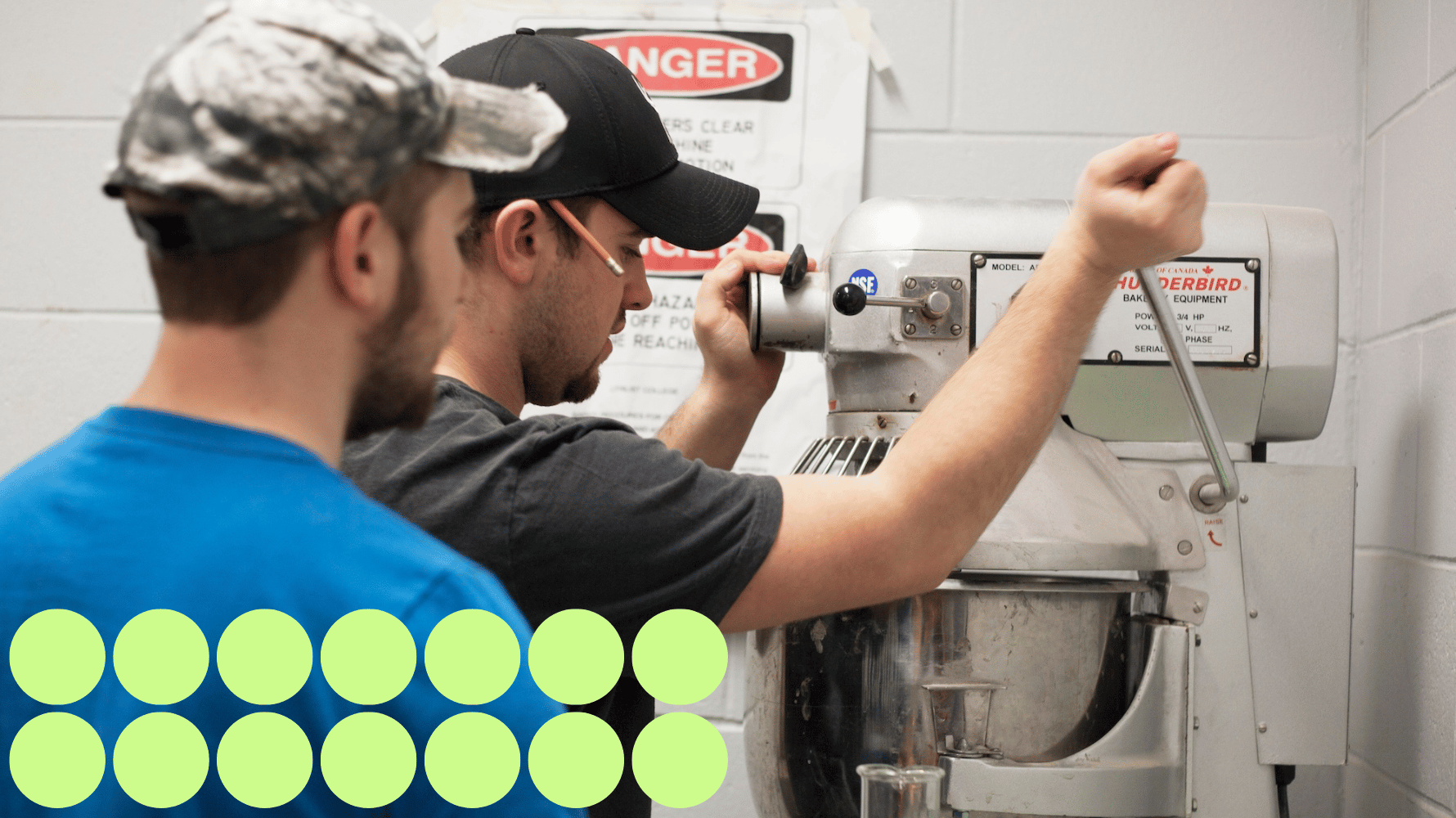
Two civil engineering technician students are looking at a mixer. One student is using the mixer while the other student is observing. Fourteen green graphic circles are in the lower lefthand corner of the image.

Admission requirements

Required academic preparation

  • OSSD/OSSGD or equivalent with courses at the general, advanced, (C), (U) or (M) level, AND
  • Grade 12 English (C) level or equivalent

OR

Recommended academic preparation

  • Grade 11 and 12 Math (MCF 3M and MCT 4C)

Academic upgrading

Are you missing admission requirements? Discover how Career and College Prep at Loyalist can help you get started on your journey.

International students

Learn more about admission requirements for international applicants and how to apply.


This program may be PGWP-eligible. Learn more and explore Loyalist’s PGWP-aligned programs.

Additional requirements

*Additional materials, trainings and certifications may be required depending on industry partner requirements connected to experiential learning. Pre-placement requirements are subject to change based on placement agency and/or legislative or regulatory changes.

Costs

Approximate costs (2025 – 26, two semesters at full-time student status)*

  • Domestic Tuition: $2,722.08
  • Full-Time Ancillary Fees: $1,595.26
  • Total: $4,317.34

Additional student-purchased costs may include textbooks, supplies, software, and other resources. Additional expenses related to off-campus experiential learning activities may also be incurred.


*All fees are subject to change. Fees for programs shorter or longer than two semesters will be adjusted accordingly. In addition to the costs listed above, some programs also have program ancillary fees based on their specific requirements. For a detailed breakdown of tuition and ancillary fees – including any program-specific charges – please visit the Tuition and fee schedule 2025–26.

Paying for college 

At Loyalist College, we believe that cost should never be a barrier to your success. We’re here to help you navigate the costs of college and connect you with a variety of financial aid programs, resources and donor-supported awards. Explore paying for college.

Schulich Builders

Students enrolling in this program may be eligible for the Schulich Builders scholarship program.

Schulich Builders covers tuition, tools and living expenses for students enrolling in a skilled trades program. Loyalist College will award ten scholarships per year:

  • Five $20,000 scholarships for one-year certificate programs, and
  • Five $40,000 scholarships for two-year diploma programs.

Learn more and apply today!

Approximate costs (2025 – 26, two semesters at full-time student status)* 

  • International Tuition: $15,900 
  • Full-Time Ancillary Fees: $1,595.26 
  • Mandatory Health Insurance: $659 
  • Total: $17,254.26

Additional student-purchased costs may include textbooks, supplies, software, and other resources. Additional expenses related to off-campus experiential learning activities may also be incurred.


*All fees are subject to change. Fees for programs shorter or longer than two semesters will be adjusted accordingly. In addition to the costs listed above, some programs also have program ancillary fees based on their specific requirements. For a detailed breakdown of tuition and ancillary fees – including any program-specific charges – please visit the Tuition and fee schedule 2025–26.

Paying for college 

At Loyalist College, we believe that cost should never be a barrier to your success. We’re here to help you navigate the costs of college and connect you with a variety of financial aid programs, resources and donor-supported awards. Explore paying for college.   

Two civil engineering technician students are working on a project in a classroom setting. Fourteen blue graphic circles are in the lower lefthand corner of the image.

Further study

Flexible learning at Loyalist College

  • With many common courses during the first-year curriculum, you have the flexibility to transfer directly into year two of the Survey Engineering Technician program (with some additional courses) or Construction Engineering Technician program.
  • Expand your qualifications and earn a double diploma in another college program in as little as two semesters.

Pathways and university transfer

Build on the knowledge and skills you learned at Loyalist by continuing your academic journey. Return to Loyalist to complete a second diploma or a post-graduate program in as little as a year, or receive credit recognition for your Loyalist studies when pursuing a degree at a university. Explore pathway opportunities.

Professional certification

College graduates must apply to the Ontario Association of Certified Engineering Technicians and Technologists (OACETT) to be certified in Ontario. Loyalist Civil Engineering Technician and Technologist graduates meet the academic requirements for accreditation as a Certified Technician (C.Tech.) or Certified Technologist (C.E.T.). Applicants are also required to:

  • Complete additional work experience
  • Provide peer references
  • Pass a Professional Practice Examination administered by OACETT, offered four times a year
  • Write a Technology Report (for C.E.T. certification)

Study abroad

Explore opportunities to continue your studies in Ireland.

Autodesk certification

Students are eligible to take the Autodesk certification exams at Loyalist College. Completing these industry-recognized credentials enables students to highlight that they have the in-demand skills employers are seeking.