Massage Therapy

Massage therapists provide safe, effective, and ethical health care by assessing, treating, and preventing physical dysfunction and pain in soft tissue and joints. You will gain the skills and knowledge to develop, implement, and evaluate safe and effective treatment plans.

Home / Learn / Programs List / Massage Therapy
Credential
Ontario College Advanced Diploma
Duration
Six semesters
Start Date(s)
September (Fall)
Locations
Belleville
Open to
International Students
Domestic Students
CIP Code
51.3501

Find your career

Prepare for a rewarding career working in a range of health and wellness industries: 

  • Massage therapy clinics 
  • Multidisciplinary health care organizations 
  • Private practice 
  • Chiropractic offices 
  • Hospitals & rehabilitation facilities  
  • Spas 
  • Health clubs 
  • Fitness centres 
  • Athletics organizations 
  • Long-term care facilities 
  • Tourism industry, including hotels and resorts 

To practise as a Registered Massage Therapist in Ontario, graduates will be required to successfully complete entry-to-practice registration examinations and register with the College of Massage Therapists of Ontario (CMTO).  
How you'll learn

Experiential Learning 

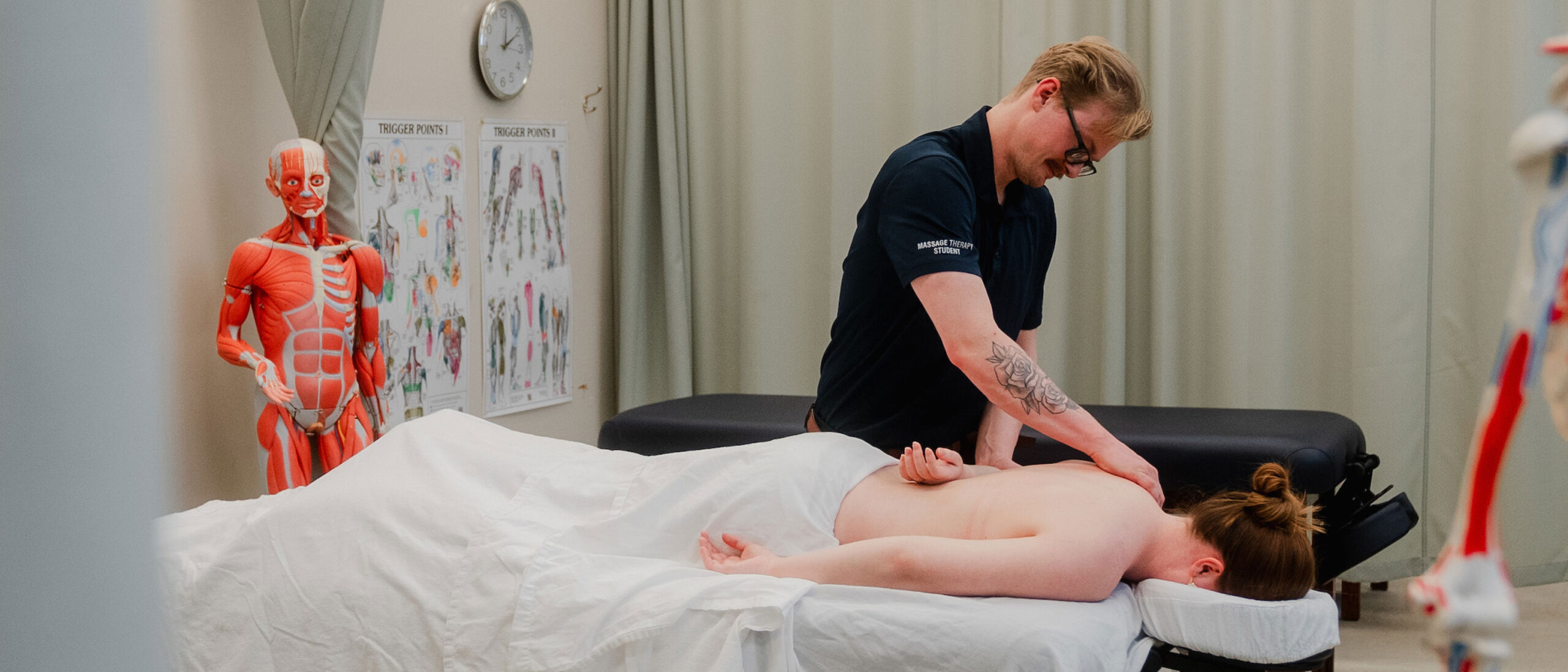
Gain the knowledge and hands-on skills for a rewarding career in the massage therapy profession during this comprehensive program that includes on-campus and clinical placements under the supervision of Registered Massage Therapists. 

  • Using manual techniques, massage therapists enhance physical function, alleviate pain, increase range of motion, and promote relaxation. 
  • Learn what is required to conduct a massage therapy practice within a legal, professional, ethical, and culturally competent framework. 
  • Gain experience developing, implementing and evaluating the effectiveness of a plan of care according to the patient’s condition and treatment goals. 
  • Acquire strategies for developing and maintaining therapeutic relationships with a variety of populations to optimize patient health and wellness. 
  • Explore business principles relevant to massage therapy practice and learn how to communicate and collaborate effectively with patients, colleagues and members of an interprofessional health care team. 

Massage Therapy Program Mission Statement

Our mission is to provide a caring, creative and comprehensive education in massage therapy, within a learning environment that promotes health, well-being and inclusive practices. Through small class sizes and individualized learning experiences, we foster collaboration and engagement, preparing students to excel in the profession with a strong sense of accountability and community. (May 2024)

Requirements for graduation 

To be eligible to graduate, students must: 

  • Successfully complete the Massage Therapy curriculum with a 65 percent cumulative average. 
  • Successfully complete faculty-supervised 330 direct patient hours. 

Sample schedule

To view sample semester schedules for the Massage Therapy program, please click here.


Accreditation

The Massage Therapy program at Loyalist College has been accredited by the Canadian Massage Therapy Council for Accreditation (CMTCA).


Courses

ANAT1012 Anatomy 1

Anatomy is a foundational aspect of massage therapy; it will be pivotal in the development and future careers of these health professionals. In this course, students learn anatomical terminology and organization within the human body. They focus on upper and lower extremity, and explore nerve pathways, muscle attachments and actions.

COMM1048 Communications

Learners strengthen the writing and research skills needed for success in college-level studies. Learners will develop and refine techniques to communicate ideas clearly, organize research effectively and produce strong academic work.

MAST1007 Massage Therapy Assessment and Skills 1

Theoretical fundamentals of assessment and treatment techniques and protocol are necessary for safe and effective practical execution. Students learn fundamental massage therapy and assessment techniques. Within a clinical decision-making model, students learn how subjective and objective assessment skills prepare a massage therapist to form a clinical impression and develop a safe and effective treatment plan. Students use critical thinking skills, with an evidence-based approach, to select and sequence massage techniques for regional treatments. Co-requisite: MAST 1008

MAST1008 Massage Therapy Assessment and Skills Lab 1

Practical assessment, treatment and rehabilitation skills of the soft tissue and joints of the body are fundamental to the scope of the practice of massage therapy. Students learn, develop, and practise fundamental massage assessment and treatment skills. They select and sequence assessment and massage techniques to provide safe and effective massage therapy treatments according to the College of Massage Therapists of Ontario’s (CMTO) Standards of Practice. Students reinforce their anatomical curriculum through description and in-depth palpation of structures of the upper limb and back. They analyze clinical case examples, strengthen critical thinking skills, and apply their knowledge to simulated situations. Co-requisite: MAST 1007

MAST1006 Physiology 1

Physiology is fundamental in the development and future careers of health professionals. In this course, students learn about physiological systems within the human body. They focus on the integumentary, musculoskeletal, cardiovascular, and respiratory systems. Students explore the processes by which these systems work and how they maintain homeostasis within the body.

MAST1009 Professionalism and Ethical Practice

Students explore the concepts related to professional identity, ethical decision making, as well as the legislation and Standards of Practice requirements of massage therapists in this course.They construct the knowledge, skills, attitudes and values required to make professional judgements and form an understanding of the role of the massage therapist in professional practice. Students actively develop their professional identity using case studies, discussion and self-reflection and relate its importance to effective professional practice.

GNED1100 Becoming a Global Changemaker

This Loyalist College graduate attributes course will help shape your perspectives, broaden your understanding of important issues affecting our societies today, and equip you with invaluable knowledge and skills that will inform your ability to influence your community in a meaningful and impactful way. By exploring topics such as cultural competency, Indigenous education, entrepreneurship, sustainability, health and wellness, and ecological literacy, you'll be equipped with a powerful toolkit that extends far beyond the classroom.

ANAT1014 Anatomy 2

This course continues to introduce anatomical terminology. The primary focus is the anatomical structure and organization of the head, neck and lower limb. Laboratory classes provide opportunity to identify the muscle groups and palpate. Prerequisite: ANAT 1012

MAST1011 Massage Therapy Assessment and Skills 2

Building upon prior knowledge, students continue to develop fundamental massage therapy and assessment techniques. They gain a deeper understanding of utilization of specific techniques and their therapeutic outcomes in massage therapy. Students develop critical thinking skills to connect limitations, impairments, and outcomes in a theoretical setting using clinical decision-making models. Prerequisite: MAST 1007 Co-requisite: MAST 1013

MAST1013 Massage Therapy Assessment and Skills Lab 2

Building on skills from semester one, students continue to develop fundamental massage assessment and treatment skills. They select and sequence assessment and massage techniques to provide safe and effective massage therapy treatments according to the College of Massage Therapists of Ontario’s (CMTO) Standards of Practice. Students reinforce their anatomical curriculum through description and in-depth palpation of structures of the lower limb and back. They analyze clinical case examples, strengthen critical thinking skills, and apply their knowledge to simulated situations. Prerequisite: MAST 1008 Co-requisite: MAST 1011

MAST1010 Physiology 2

In this course, students continue their exploration of the human body. They explore the digestive, urinary, reproductive, and endocrine systems and special senses. Students explain how these systems maintain homeostasis and integrate to optimize the overall function of the body. Prerequisite: MAST 1006

MAST1012 Therapeutic and Professional Relationships

Learners build the communication skills needed to form professional relationships and strong therapeutic rapport with diverse clients. The course focuses on effective listening, professional boundaries, inclusive language and recognizing verbal and non‑verbal cues. Through group work and reflection, learners explore relationship‑building, cultural inclusivity, gender diversity and trauma‑informed care. They also practice gathering and documenting clients’ health information through role play and clinical case work. The course includes an introduction to the clinic module to prepare learners for supervised practice. Prerequisite: MAST 1009, MAST 1007, MAST 1008

MAST2011 Care of Special Populations 1

Care of Special Populations 1 is designed to prepare students for work-integrated learning, community placements and their future as a regulated health care professional. In this course, students discover lifespan development and explore how to care for the special populations of pregnant and post-partum people, infants and children. Students investigate topics such as changes during lifespan development, as well as assessment and treatment modifications during pregnancy, labour and delivery, postpartum, infancy and childhood. Students will apply their knowledge through the analysis of evidence-informed research, self- reflection, interprofessional collaboration, simulated patient cases and real patient experiences. Prerequisite: MAST 1011, MAST 1012, MAST 1013

MAST2007 Pathophysiology 1

In this course, students explore conditions associated with a number of the body systems fundamental to the study of massage therapy. Conditions relate to the immunological, dermatological, musculoskeletal, and neurological systems. Students review important concepts of infection control and pharmacology. Prerequisite: MAST 1010

MAST2010 Remedial Exercise

In this course, students learn the fundamentals of therapeutic exercise as it pertains to Massage Therapy care in a clinical setting. They apply exercise principles and establish a program for their client/patient based on their unique needs assessment through simulation. Students explain exercise prescription and when to apply exercises and stretching within a treatment plan. Prerequisite: MAST 1011, MAST 1013

MAST2016 Treatment Planning for Postural & Orthopedic Conditions

Students will apply foundational assessment and treatment skills to plan safe, effective interventions for common postural and orthopedic conditions. They explore typical clinical presentations, learn the biomechanics of joint play and develop competency in the application of joint play mobilizations. Through this integration, students enhance their ability to create comprehensive treatment plans. Prerequisite: MAST 1011, MAST 1013

MAST2017 Treatment Planning of Postural & Orthopedic Conditions

Students will apply foundational knowledge of postural and orthopedic conditions to plan and perform massage therapy assessments and treatments. They develop core skills in assessment, positioning, techniques, treatment sequencing and therapeutic exercise. Foundational joint play and mobilization skills are integrated to support effective clinical reasoning and evidence‑informed practice. Prerequisite: MAST 1011, MAST 1013

WKPL2078 Work Integrated Learning 1

In this course, students use their knowledge and skills to provide massage therapy care to the public in a clinical environment. Students assess the patient/client and create and implement a treatment plan under the supervision of a Registered Massage Therapist (RMT). Students focus on developing professional patient-therapist relationships and boundaries, performing comprehensive patient evaluation, and creating detailed patient records. Prerequisite: ANAT 1014, MAST 1010, MAST 1011, MAST 1012, MAST 1013

GNED General Education Elective

MAST2015 Care of Special Populations 2

This course focuses on working with individuals living with disabilities, mental health conditions or the effects of trauma. Students examine principles of accessibility and equity in healthcare, including human rights frameworks, inclusive language and legal protections for persons with disabilities. Emphasis is placed on cultural competency, exploring how diverse cultural perspectives influence health experiences and access to services. Students analyze common mental health conditions, review current research and discuss strategies for fostering inclusive, trauma-informed and culturally responsive practices. Prerequisite: MAST 2011

WKPL2080 Community Placement 1

In this course, students use their knowledge and skills to provide massage therapy care to patients in the community through a community placement. Students assess the patient/client and create and implement a treatment plan under the supervision of a Registered Massage Therapist (RMT). This community placement focuses on and allows students to treat the following populations: pregnancy, infants, and adolescent athletes. Prerequisite: MAST 2010, MAST 2011, WKPL 2078, MAST 2016, MAST 2017

RESE3001 Introduction to Research in Practice

Students learn basic concepts related to research literacy by understanding and applying research to develop evidence informed clinical practice. They will read and analyze massage related articles and content for credibility and usefulness, as well as refining skills for acquiring good research habits.

MAST2012 Pathophysiology 2

In this course, students explore the anatomy and physiology of the nervous system and associated conditions. Prerequisite: MAST 2007

MAST2008 Treatment Planning for Inflammatory & Musculoskeletal Conditions

Students apply fundamental skills from foundational courses to plan assessments and treatments for postural and musculoskeletal conditions. They learn common presentations of these conditions and use this knowledge to design and carry out safe, effective treatment plans. The course also strengthens clinical interview skills and introduces effective treatment‑planning strategies specific to musculoskeletal conditions. Prerequisite: MAST 2016, MAST 2017

MAST2009 Treatment of Inflammatory & Musculoskeletal Conditions

Learners practice hands‑on assessment and treatment skills for musculoskeletal and inflammatory conditions. They refine subjective and objective assessment techniques, use a structured clinical decision‑making model and develop evidence‑informed treatment plans. Simulated clinical practice emphasizes safe technique selection and clear clinical reasoning. Prerequisite: MAST 1011, MAST 1013, MAST 1010

WKPL2079 Work Integrated Learning 2

In this course, students use their knowledge and skills to provide massage therapy care to the public in a clinical environment. Students assess the patient/client and create and implement a treatment plan under the supervision of a Registered Massage Therapist (RMT). Students focus on prescribing home care and self-care to their patients/clients. Prerequisite: MAST 1010, MAST 2011, MAST 2016, MAST 2017, WKPL 2078

MAST3012 Advanced Remedial Exercise

Students will apply evidence-informed exercise prescription in clinical massage therapy. Students develop client‑specific programs and practice remedial exercise for special populations, including modifications for common physical limitations. The course also introduces therapeutic modalities to promote professional growth and support lifelong learning through hands‑on simulation and skill development. Prerequisite: MAST 2010, MAST 2008 or MAST 2009

WKPL3024 Community Placement 2

In this course, students use their knowledge and skills to provide massage therapy care to patients in the community through a community placement. Students assess the patient/client and create and implement a treatment plan under the supervision of a Registered Massage Therapist (RMT). This community placement focuses on and allows students to treat the following populations: mental health and substance use. Prerequisite: MAST 2017, MAST 2015, WKPL 2079, WKPL 2080

MAST3008 Pathophysiology 3

In this course, students explore conditions associated with the reproductive system, renal-urinary system, lymphatic system, endocrine system, digestive system, respiratory system, and cancer concepts. Prerequisite: MAST 2012

MAST2013 Treatment Planning for Neurological Conditions

Students will learn the presentation and massage therapy management of common neurological presentations. They will develop neurological assessment skills and apply massage therapy treatment skills acquired in prior courses to plan treatments for neurological conditions. Prerequisite: MAST 2008, MAST 2012, MAST 2009

MAST2014 Treatment of Neurological Conditions

Students sequence and perform assessments and massage therapy treatments for neurological conditions. They apply knowledge of neurological conditions to develop and practise fundamental massage assessment, positioning, techniques, and sequencing skills. Students learn foundational neurological assessment skills and they integrate these as a component of the massage therapy treatment. Prerequisite: MAST 2009

WKPL3023 Work Integrated Learning 3

In this course, students use their knowledge and skills to provide massage therapy case to the public in a clinical environment. Students assess the patient/client and create and implement a treatment plan under the supervision of a Registered Massage Therapist (RMT). Students focus on neurological assessments and evidence informed decision making. Prerequisite: MAST 2017, MAST 2015, WKPL 2079, WKPL 2080

GNED General Education Elective

MAST3011 Business Management

Students prepare for their future as regulated healthcare professionals and develop skills and knowledge necessary for employment or self-employment in the profession of massage therapy. Students gain knowledge regarding legal and regulatory requirements, financial literacy, leadership and management. Students develop professional communication skills creating, analyzing and defending standard business documents.

MAST3013 Care of Special Populations 3

Students focus on older adults and those at end of life, exploring approach and treatment planning. Students discuss effective communication skills that respect the dignity and individuality of this special population. Students explore concepts of ageism, capacity for consent, caregiver fatigue, palliative care and grieving the death of a client. Prerequisite: MAST 2015

WKPL3026 Community Placement 3

In this course, students use their knowledge and skills to provide massage therapy care to patients in the community through a community placement. Students assess the patient/client and create and implement a treatment plan under the supervision of a Registered Massage Therapist (RMT). This community placement focuses on and allows students to treat the following populations: palliative and neurological conditions. Prerequisite: MAST 2014, WKPL 3023, WKPL 3024

MAST3010 Comprehensive Review & OSCE Preparation

Students review knowledge and skills acquired throughout the massage therapy program of study related to the theory and practice of massage therapy in Ontario. Students prepare for the College of Massage Therapists of Ontario entry to practice Multiple-Choice Question (MCQ) examination and the Objectively Structured Clinical Evaluation (OSCE) examination. Prerequisite: RESE 3001, WKPL 3023, WKPL 3024, MAST 3008, MAST 2013, MAST 2014

MAST3009 Integrated Approach to Practice

This course prepares students for collaborative practice in an interprofessional setting. Students will be expected to demonstrate knowledge translation, leadership, and facilitation skills with other team members throughout the responsive inclusive planning process. Students will explore group facilitation skills and the importance of group dynamics in advocacy and decision making. Prerequisite: WKPL 3023, WKPL 3024

WKPL3025 Work Integrated Learning 4

This course allows students to develop mastery skills and knowledge to provide massage therapy to the public in a clinical environment. Students will demonstrate their skills by assessing, creating and implementing an evidence-informed treatment plan, all under the supervision of a Registered Massage Therapist (RMT). Managerial and business experiences help students develop clinical leadership skills. Prerequisite: MAST 2014, WKPL 3023, WKPL 3024

*Courses subject to change.

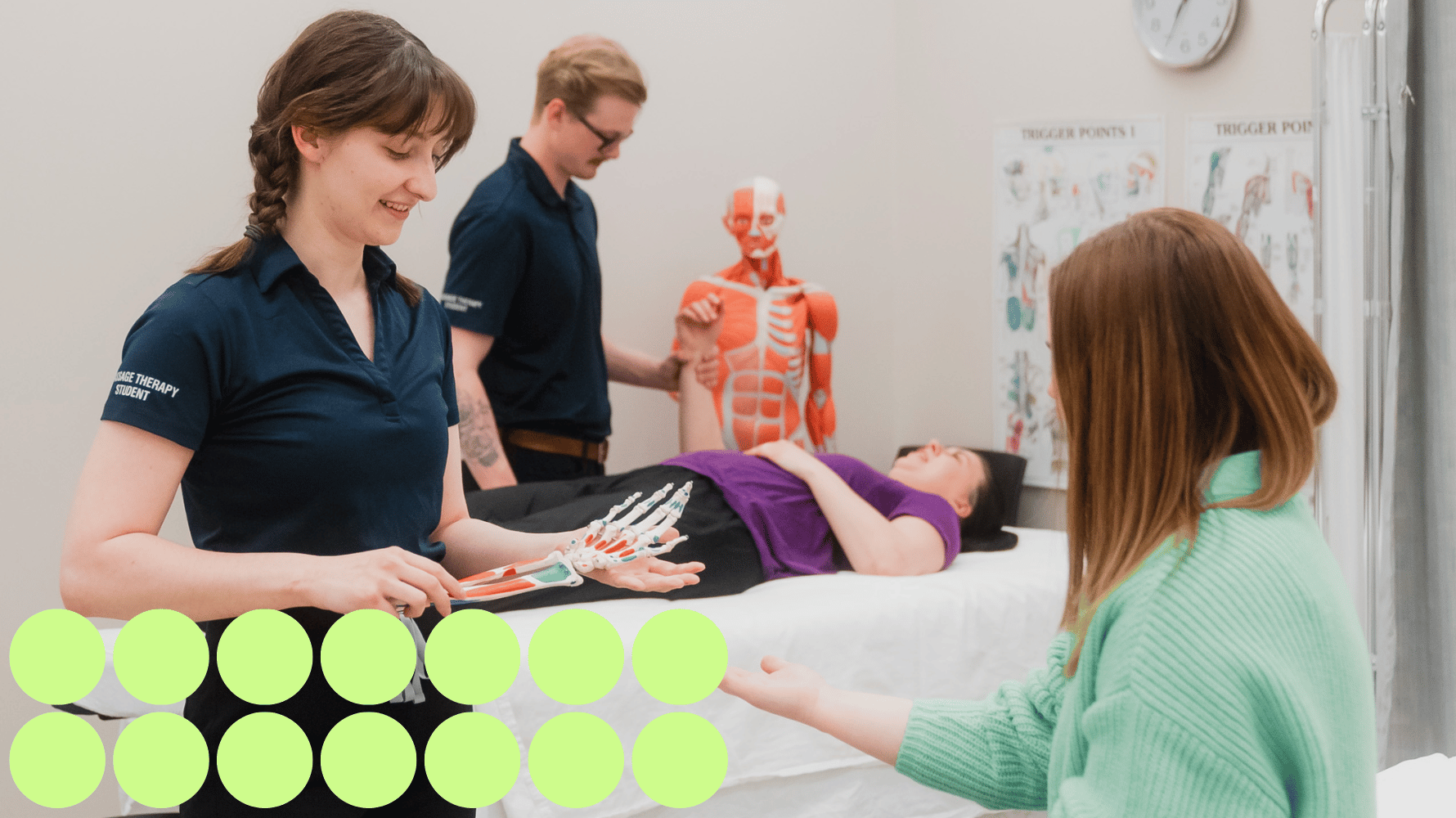
A massage therapy student shows a skeletal model of a hand to another person holding out a hand. In the background, another massage therapy student holds the wrist of a person lying on a massage table. Green graphic circles are in the lower lefthand corner of the image.

Admission requirements

Required academic preparation 

  • Ontario Secondary School Diploma (OSSD/OSSGD) or equivalent with courses at the general, advanced, (C), (U) or (M) level with Grade 11 or 12 Biology (C) or (U), AND 
  • Grade 12 English (C) level or equivalent

OR 

Additional requirements 

  • Vulnerable Sector Check during semester one (must be repeated every six months to one year based on agency requirements)
  • A formal, confidential personal health history and up-to-date immunization against certain communicable diseases are required prior to semester three.
    • Required: Tuberculosis testing, measles, mumps, rubella (MMR), poliomyelitis, tetanus, diphtheria, pertussis, hepatitis B Varicella.
    • Recommended: COVID-19, influenza
  • Standard First Aid and CPR Level “C” certification prior to semester three.
  • N95 mask fit certificate prior to semester three
  • Additional training modules and WSIB forms are required to be completed throughout the program.

*Additional materials, trainings and certifications may be required depending on industry partner requirements connected to experiential learning. Pre-placement requirements are subject to change based on placement agency and/or legislative or regulatory changes.

Academic upgrading

Are you missing admission requirements? Discover how Career and College Prep at Loyalist can help you get started on your journey.

International students  

Learn more about admission requirements for international applicants and how to apply.


This program may be PGWP-eligible. Learn more and explore Loyalist’s PGWP-aligned programs.

Costs

Approximate costs (2025 – 26, two semesters at full-time student status)* 

  • Domestic Tuition: $2,722.08 
  • Full-Time Ancillary Fees: $1,595.26 
  • Total: $4,317.34

Additional student-purchased costs may include textbooks, supplies, software, and other resources. Additional expenses related to off-campus experiential learning activities may also be incurred.


*All fees are subject to change. Fees for programs shorter or longer than two semesters will be adjusted accordingly. In addition to the costs listed above, some programs also have program ancillary fees based on their specific requirements. For a detailed breakdown of tuition and ancillary fees – including any program-specific charges – please visit the Tuition and fee schedule 2025–26.

Paying for college 

At Loyalist College, we believe that cost should never be a barrier to your success. We’re here to help you navigate the costs of college and connect you with a variety of financial aid programs, resources and donor-supported awards. Explore paying for college.

Approximate costs (2025 – 26, two semesters at full-time student status)* 

  • International Tuition: $15,900 
  • Full-Time Ancillary Fees: $1,595.26
  • Mandatory Health Insurance: $659 
  • Total: $17,254.26

Additional student-purchased costs may include textbooks, supplies, software, and other resources. Additional expenses related to off-campus experiential learning activities may also be incurred.


*All fees are subject to change. Fees for programs shorter or longer than two semesters will be adjusted accordingly. In addition to the costs listed above, some programs also have program ancillary fees based on their specific requirements. For a detailed breakdown of tuition and ancillary fees – including any program-specific charges – please visit the Tuition and fee schedule 2025–26.

Paying for college 

At Loyalist College, we believe that cost should never be a barrier to your success. We’re here to help you navigate the costs of college and connect you with a variety of financial aid programs, resources and donor-supported awards. Explore paying for college.  

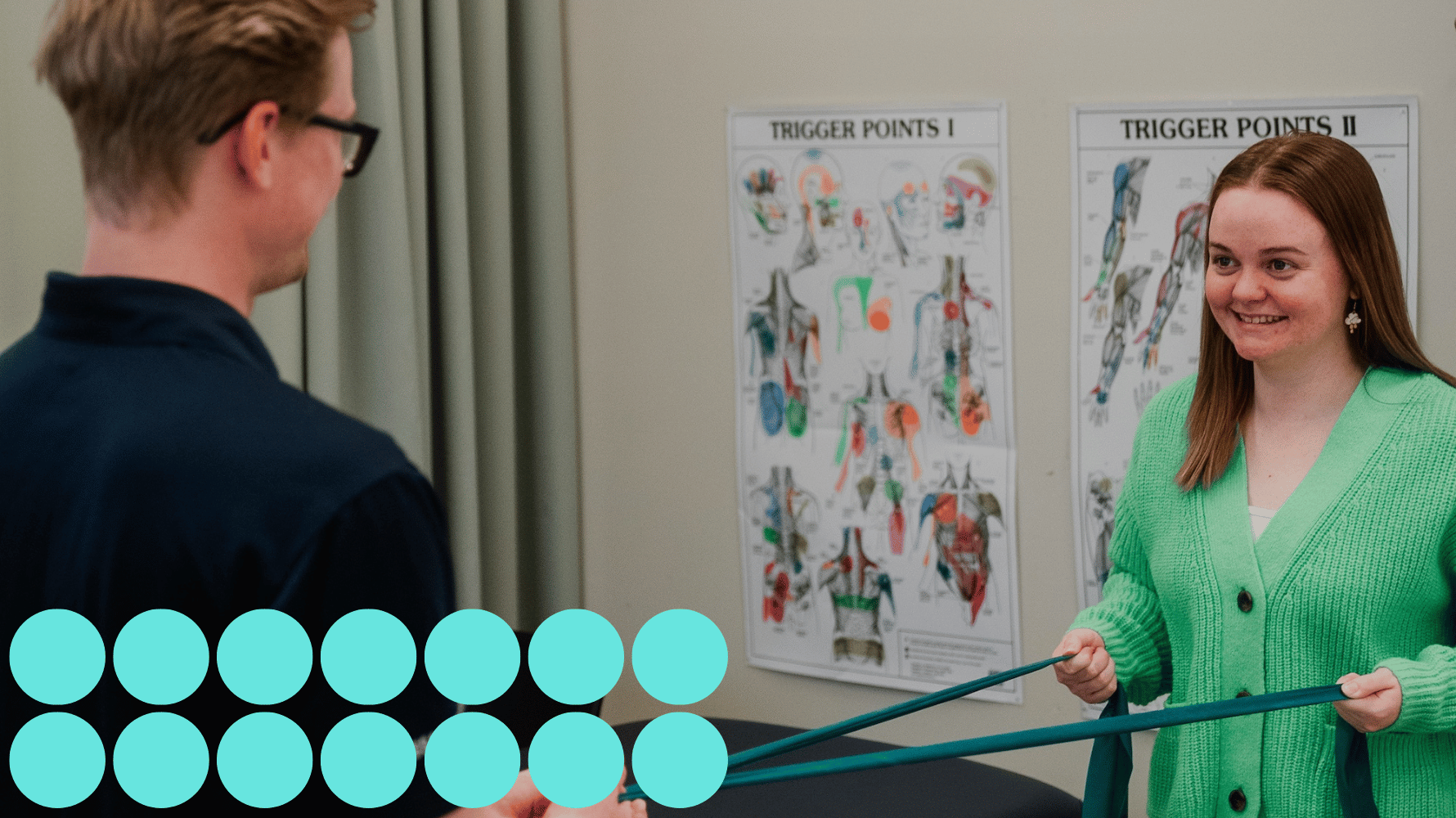
A massage therapy student holds an exercise band while another person pulls on the other end, smiling and standing in front of two posters containing trigger point diagrams. Blue graphic circles are in the lower lefthand corner of the image.

Further study

Pathways and university transfer 

What’s next? Build on the knowledge and skills you learned at Loyalist by continuing your academic journey. Return to Loyalist to complete a second diploma or a post-graduate program in as little as a year, or receive credit recognition for your Loyalist studies when pursuing a degree at a university. Explore pathway opportunities.