
Registered Nurse Critical Care Nursing (Online)

This one-year graduate certificate prepares registered nurses to provide specialized holistic care to patients and their families experiencing life-threatening illness. Students will gain advanced knowledge in assessment and management of critically ill patients.

Home / Learn / Programs List / Registered Nurse Critical Care Nursing (Online)
Credential
Ontario College Graduate Certificate
Duration
Three semesters
Start Date(s)
September (Fall)
Locations
Online
Open to
Domestic Students
CIP Code
51.3901

Find your career

Expand your career as a registered nurse with this one-year graduate certificate. A final placement opportunity in semester 3, allows students to apply the knowledge acquired during semesters 1 and 2. Graduates are prepared for nursing roles in high acuity care areas such as generalized and specialized intensive care units, emergency departments and rapid response teams.

The Critical Care Nursing Graduate Certificate at Loyalist College is designed for registered nurses who are passionate about providing exceptional care to patients experiencing life-threatening illness, complex health conditions and end-of-life situations. Whether you’re looking to advance your nursing career or build specialized expertise in high-acuity patient care, this program equips you with the advanced knowledge, clinical judgment and confidence needed to excel in critical care environments. 

Through a combination of advanced theory, virtual simulations and experiential learning, students develop specialized skills in the assessment and management of critically ill patients, the safe and effective use of complex critical care technologies and rapid clinical decision-making. Students also strengthen their inter-professional communication and collaboration skills while building a strong foundation in holistic, patient and family-centered care.

Is it for you?

People of all ages can thrive in this program. They must be: 

  • Passionate about helping others. 
  • Caring and compassionate. 
  • Inquisitive and eager to learn. 
  • Driven to make a difference in people’s quality of care. 
  • Committed to upholding ethics and morals.
How you'll learn

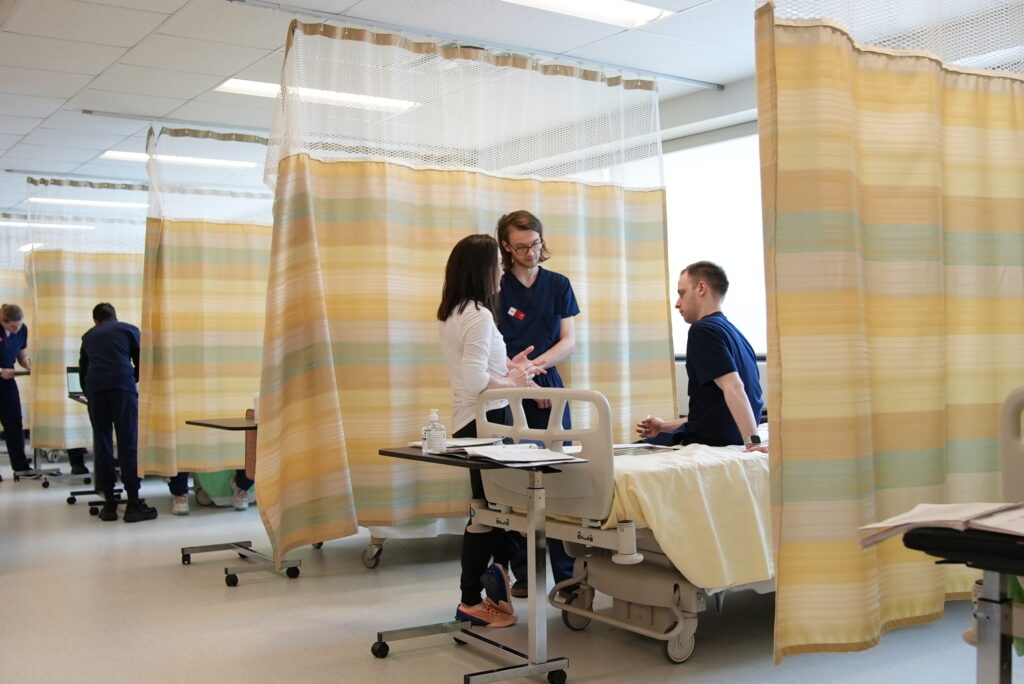
All courses (including the skills and simulations labs) will be delivered using a flexible, completely asynchronous yet interactive approach. Placements will be done on-site in an intensive care unit of the student’s choosing (subject to approval by the agency).

Courses

CCNU1003 Care of Patients with a Critical Cardiovascular Illness

Students explore the provision of evidence-informed care to patients with complex cardiovascular conditions such as acute coronary syndromes, heart failure, arrhythmias and cardiogenic shock. Advanced cardiovascular assessment skills, hemodynamic monitoring and clinical reasoning using case study and virtual simulation are focus areas. Emphasis is placed on understanding the pathophysiology behind cardiovascular emergencies and complex conditions to support students in delivering safe, compassionate and informed care in critical care settings.

CCNU1002 Care of Patients with a Critical Neurological Illness

In this course, students develop specialized skills to care for critically ill patients experiencing neurological challenges. Students learn advanced assessment, monitoring and evidence-based interventions for conditions such as stroke, traumatic brain injury, seizures and neurological emergencies. Through case studies and hands-on learning, students explore ethical decision making, interdisciplinary collaboration and the nurse’s role in supporting recovery and dignity. With an emphasis on understanding the pathophysiology behind neurological conditions and tailoring care to meet individual needs, students are ready to deliver safe, compassionate and informed care in critical care settings.

CCNU1001 Critical Care Essentials: Diagnostic Testing, Fluid Management and Pharmacology

Students develop the essential knowledge and skills to interpret and apply diagnostic testing, manage complex fluid and electrolyte imbalances and understand pharmacologic interventions in critical care. Students use case-based scenarios and interactive simulation to explore the role of laboratory and other diagnostic testing to guide clinical decision making. With an emphasis on understanding the pathophysiology behind abnormal findings and the subsequent interventions that support organ function and improved patient outcomes, students prepare to integrate their knowledge to practice using an evidence-informed approach.

CCNU1000 Foundations of Critical Care Nursing

In this course, students explore the dynamic world of critical care nursing, emphasizing compassionate, competent care for critically ill patients. Through case studies, reflective practice and evidence-based learning, students examine the nurse’s role in pain management, comfort, and advocacy—including end-of-life support. Students develop expertise and enhance existing skills in therapeutic communication, ethical reasoning and interdisciplinary collaboration, contributing to safe and effective professional care. Students prepare for advanced practice through increased knowledge of the clinical and emotional complexities faced by patients, families, and healthcare providers in the critical care setting.

CCNU1006 Care of Patients with a Critical Endocrine, Gastrointestinal or Genitourinary Illness

Students develop knowledge and skill to care for critically ill patients experiencing endocrine, gastrointestinal and genitourinary conditions in the critical care area. Using case studies and virtual simulation, students explore the pathophysiology behind complex conditions. Students demonstrate advanced assessment and monitoring skills to provide evidence-informed care to patients with conditions such as diabetic ketoacidosis, GI bleeding, urosepsis and electrolyte disturbances in a critical care setting.

CCNU1005 Care of Patients with a Critical Respiratory Illness

Students develop skills in providing evidence-informed care to critically ill patients with complex respiratory conditions such as ARDS, pneumonia, COPD exacerbations and respiratory failure. Students explore advanced respiratory assessment skills and monitoring using case studies and virtual simulation. Students examine the nurse's role in ethical decision-making and interdisciplinary collaboration related to supporting ventilation and oxygenation. Emphasis is placed on understanding the pathophysiology behind respiratory compromise and the delivery of safe, informed compassionate care in the critical care setting.

CCNU1007 Critical Care Intensive Lab Skill Simulation

Students focus on advanced critical care skills through an immersive virtual simulation course offering case-based learning. Students apply and interpret ECGs, manage hemodynamic monitoring via arterial and pulmonary artery catheters, implement sepsis bundle protocols and monitor intracranial pressure. Acute cardiac life support scenarios challenge students to respond with precision and confidence in applying learning and experience. Students demonstrate advanced clinical judgment and technical proficiency through an experience that bridges theory and practice in a safe, interactive environment. Advanced clinical judgment and technical proficiency through an experience that bridges theory and practice in a safe, interactive environment.

CCNU1004 ECG Interpretation

In this course, students develop knowledge and practical skills for accurate electrocardiogram (ECG) interpretation. Students systematically analyze ECG rhythms, identify common arrhythmias and recognize signs of myocardial ischemia and infarction. Topics include lead placement, waveform morphology and clinical correlation of ECG findings. Through interactive exercises and case studies, students develop confidence in interpreting ECGs to guide clinical decision-making and enhance patient care in various healthcare settings.

WKPL1048 Clinical Placement

In this practicum, students advance their critical care competencies through direct placement. Working alongside experienced critical care nurses and interprofessional team members, learners apply and interpret cardiac rhythms, manage hemodynamic monitoring using arterial and pulmonary artery catheters, implement evidence-based sepsis protocols and participate in the assessment and management of patients with intracranial pressure monitoring. Exposure to acute cardiac and multi-system emergencies challenges students to integrate theory with real-time clinical decision-making while delivering safe, high-quality patient care. Learners observe and participate in critical care interventions, reinforcing their understanding of ICU workflows and patient management while gaining guided experience in a critical care environment. Prerequisite: CCNU 1000, CCNU 1001, CCNU 1002, CCNU 1003, CCNU 1004, CCNU 1005, CCNU 1006, CCNU 1007

*Courses subject to change.

Admission requirements

Current and unrestricted registration as a Registered Nurse with the College of Nurses of Ontario (or equivalent from another Canadian jurisdiction).

Costs

Approximate costs (2025 – 26, at full-time student status)* 

  • Domestic Tuition: $3,986.64 (year one) and $5,954.73 (year two – three semesters) 
  • Full-Time Ancillary Fees: $1,595.26 for year one; and $2,392.89 for year two (three semesters) 
  • Additional Program Costs: $776 (year one) and $226 (year two) 
  • Students are required to have a laptop with a camera.

Additional student-purchased costs may include textbooks, supplies, software, and other resources. Additional expenses related to off-campus experiential learning activities may also be incurred.


*All fees are subject to change. Fees for programs shorter or longer than two semesters will be adjusted accordingly. In addition to the costs listed above, some programs also have program ancillary fees based on their specific requirements. For a detailed breakdown of tuition and ancillary fees – including any program-specific charges – please visit the Tuition and fee schedule 2025–26.

Paying for college 

At Loyalist College, we believe that cost should never be a barrier to your success. We’re here to help you navigate the costs of college and connect you with a variety of financial aid programs, resources and donor-supported awards. Explore paying for college.   


Ontario Learn and Stay Grant – NEW!

First-semester students in this program may be eligible for the Ontario Learn and Stay grant.   

The Ontario Learn and Stay Grant provides funding for students studying in priority programs in priority communities in Ontario with a focus on: 

  • encouraging learning and working in the same region where you study 
  • meeting current labour market needs 
  • ensuring communities have the workers they need for in-demand jobs 

LEARN MORE