
Community Pharmacy Assistant

Gain the skills to become an essential member of the pharmacy team. The Community Pharmacy Assistant Ontario College Certificate program combines classroom learning, labs, and community placements to prepare you for work in pharmacies, clinics, and long-term care settings.

Home / Learn / Programs List / Community Pharmacy Assistant
Credential
Ontario College Certificate
Duration
Two semesters
Start Date(s)
September (Fall)
Locations
Belleville
Open to
International Students
Domestic Students
CIP Code
51.0805

Find your career

Pharmacy assistants are vital members of the healthcare team, supporting pharmacists and pharmacy technicians to optimize patient health. The employment outlook for pharmacy assistants in Ontario is strong, driven by growth, retirements, and increasing demand for medication management in aging populations.

Graduates are prepared for roles in:

  • Community pharmacies
  • Medical clinics
  • Hospitals
  • Long-term care facilities
  • Private medical industries
  • Consulting firms
  • Insurance companies

Is it for you? 

A career as a pharmacy assistant may be a good fit if you: 

  • Have strong attention to detail and excellent organizational skills. 
  • Enjoy working collaboratively as part of a team.  
  • Are adaptable and open to learning new technologies, health care regulations and pharmacy practices. 
  • Communicate effectively and excel at problem-solving.  

How you'll learn

Experiential learning

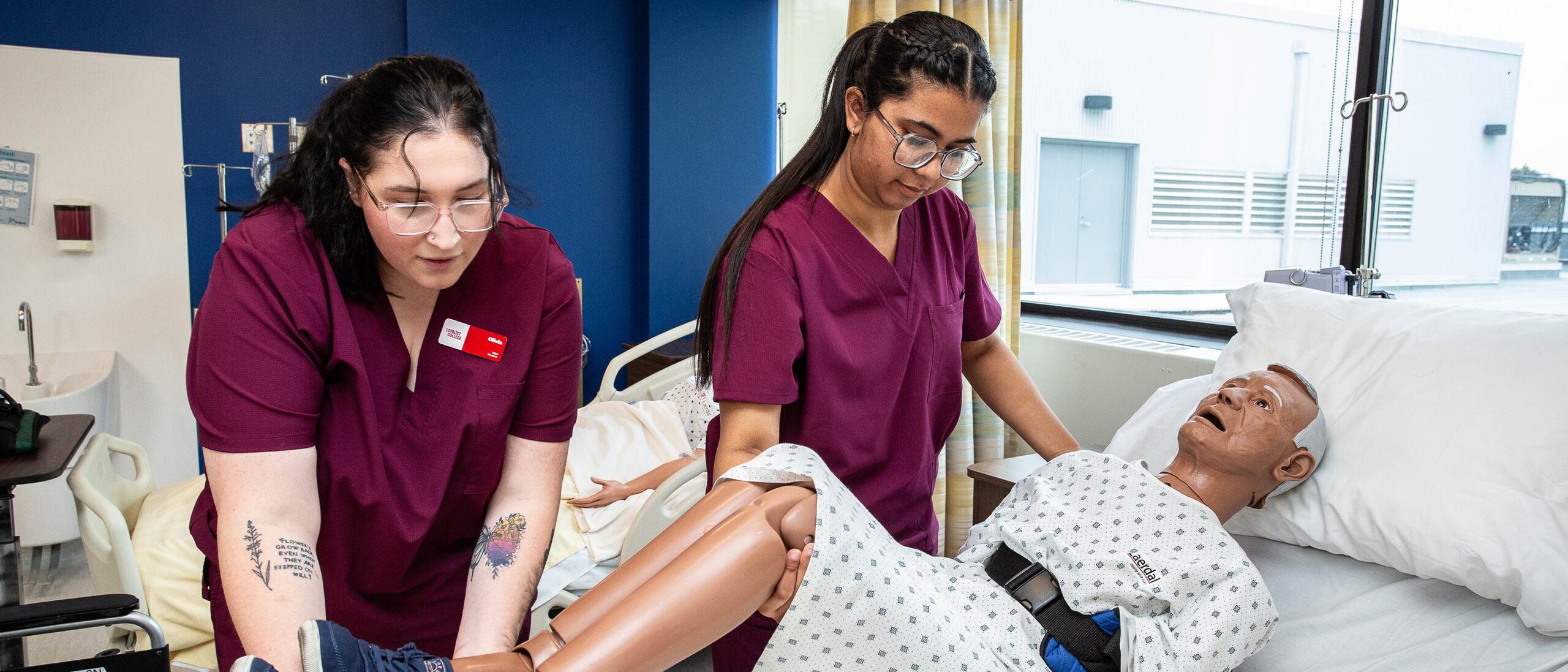
Learning combines classroom study, interactive labs, and hands-on placements in community pharmacy settings.

  • Practice dispensing, packaging, and labelling prescriptions, managing inventory, compounding non-sterile products, and using pharmacy software.
  • Placements provide real-world experience under the guidance of professionals.

Courses

COMM1048 College Writing Skills

This course focuses on writing and research skills required for successful completion of college-level studies. The course will promote development and improvement of research and writing skills that can be applied to students’ chosen programs of study.

PHAS1004 Community Pharmacy Assistant Lab 1

Students will explore essential skills required for a Community Pharmacy Assistant. Through simulated pharmacy environments, students will apply the theoretical knowledge gained in other courses to real-world tasks, including the accurate dispensing, packaging, and labelling of medications. Co-requisite: PHAS 1003

PHAS1003 Community Pharmacy Assistant Theory 1

Students will study the core concepts related to pharmacy operations, including the roles and responsibilities of the pharmacy team, the medication dispensing process, inventory management and patient care services. The course focuses on understanding the workflow within a community pharmacy, from receiving prescriptions to dispensing medications, while ensuring accuracy and compliance with regulatory standards. Students will learn how to support the pharmacist and pharmacy technician in tasks such as managing pharmacy records, handling inventory and providing excellent customer service. Co-requisite: PHAS 1004

PHAS1000 Foundations of Pharmaceutical Products

Students will explore the foundational knowledge of pharmaceutical products essential for a Community Pharmacy Assistant. Students will examine the various types of pharmaceutical products, including prescription medications, over-the-counter drugs and natural health products. Emphasis is placed on understanding drug classifications, mechanisms of action, therapeutic uses and potential side effects. Through this course, students will develop the ability to accurately identify and discuss common pharmaceutical products using appropriate pharmacology and health science terminology.

PHAS1005 Human Body Systems

Students will explore human body systems and the common disease states relevant to pharmacy practice. Students will also examine the structure and function of major body systems, including the cardiovascular, respiratory, nervous and digestive systems, among others. The course will also cover the pathophysiology of common diseases affecting these systems, providing students with a foundational understanding of how diseases alter normal physiological processes. Emphasis is placed on the relationship between body systems and the therapeutic approaches used in pharmacy to manage and treat various conditions.

PHAS1006 Inclusive Healthcare Practice

Students will explore the importance of diversity and cultural competence in healthcare, with a focus on the unique needs of diverse patient populations in a community pharmacy setting. Students will examine the social, cultural and other factors that influence patient health beliefs, behaviors and outcomes. The course emphasizes the role of healthcare professionals in providing equitable and inclusive care to all patients, regardless of their background.

PHAS1002 Legislation and Professional Practice

Students will focus on the professional practices and ethical responsibilities of a Community Pharmacy Assistant within the context of Ontario’s healthcare system. Students will explore the roles and responsibilities of pharmacy assistants, emphasizing adherence to legal and regulatory requirements governing pharmacy practice. Key topics include maintaining patient confidentiality, managing sensitive health information and understanding the scope of practice for pharmacy assistants.

PHAS1001 Pharmacy Math for Assistants

Community Pharmacy Assistant students will examine the essential mathematical skills required for accurate medication preparation and dispensing. The course covers a wide range of topics, including basic arithmetic, fractions, decimals, percentages, ratios and proportions as they apply to pharmacy calculations. Students will learn to perform dosage calculations, convert units of measurement, and calculate quantities for prescription fulfillment with precision. Emphasis is placed on the practical application of these skills in a pharmacy setting, ensuring students can minimize errors and contribute to safe medication practices.

WKPL1044 Community Pharmacy Assistant Field Placement

Students will gain a deeper practical experience in a community pharmacy setting, building on the foundational skills developed in their initial placement. Under the guidance of experienced pharmacy professionals, students will refine their ability to work efficiently within the pharmacy team, applying advanced knowledge of pharmacy operations, legal requirements and patient care. Emphasis is placed on professionalism, ethical decision-making and the ability to adapt to the dynamic environment of a community pharmacy. Prerequisite: PHAS 1010

PHAS1010 Community Pharmacy Assistant Lab 2

Students will engage in more complex tasks regarding the accurate dispensing and management of substances, compounding of specialty non-sterile products and handling of medications. The course emphasizes precision, attention to detail and adherence to safety protocols, ensuring that students can perform their duties with a high level of accuracy. Prerequisite: PHAS 1004 Co-requisite: PHAS 1009

PHAS1009 Community Pharmacy Assistant Theory 2

Students gain a deeper knowledge of the operational and clinical aspects of working as a Community Pharmacy Assistant. Students will explore advanced topics related to pharmacy operations, including more complex medication dispensing processes, the management of controlled substances and the handling of high-risk medications. The course also covers administrative tasks, such as managing pharmacy documentation, supporting pharmacy audits and ensuring compliance with regulatory requirements. Prerequisite: PHAS 1003 Co-requisite: PHAS 1010

PHAS1008 Inventory and Pharmacy Management for Pharmacy Assistants

Students will examine the knowledge and skills necessary to effectively manage inventory and administrative tasks within a community pharmacy. Students will learn about the processes and best practices involved in inventory control, including ordering, receiving, storing and organizing pharmaceutical products. The course covers key concepts such as stock rotation, managing expired products and ensuring compliance with regulatory requirements for the storage and handling of medications.

PHAS1007 Pharmacology Basics for Assistants

Students will explore fundamental principles of pharmacology, providing a solid foundation for understanding how medications work within the body. Topics include mechanisms of drug action, drug classifications and the therapeutic uses of common medications. Students will also learn to recognize the indications, contraindications and potential side effects of various drug classes, equipping them with the knowledge needed to assist pharmacists and pharmacy technicians in delivering safe and effective medication therapy.

GNED1100 Becoming a Global Changemaker

This Loyalist College graduate attributes course will help shape your perspectives, broaden your understanding of important issues affecting our societies today, and equip you with invaluable knowledge and skills that will inform your ability to influence your community in a meaningful and impactful way. By exploring topics such as cultural competency, Indigenous education, entrepreneurship, sustainability, health and wellness, and ecological literacy, you'll be equipped with a powerful toolkit that extends far beyond the classroom.

*Courses subject to change.

Pharmacy worker checking medication at a computer.

Admission requirements

Required academic preparation 

OSSD/OSSGD with courses at the general, advanced, (C), (U) or (M) level or equivalent with the following required courses:

  • Grade 12 English level
  • Grade 11 or 12 Mathematics

OR

Additional requirements 

*Additional materials, trainings and certifications may be required depending on industry partner requirements connected to experiential learning. Pre-placement requirements are subject to change based on placement agency and/or legislative or regulatory changes.

Academic upgrading

Are you missing admission requirements? Discover how Career and College Prep at Loyalist can help you get started on your journey.

International students

Learn more about admission requirements for international applicants and how to apply.

Costs

Approximate costs (2025 – 26, two semesters at full-time student status)*

  • Domestic Tuition: $2,722.08
  • Full-Time Ancillary Fees: $1,595.26
  • Total: $4,317.34

Additional student-purchased costs may include textbooks, supplies, software, and other resources. Additional expenses related to off-campus experiential learning activities may also be incurred.


*All fees are subject to change. Fees for programs shorter or longer than two semesters will be adjusted accordingly. In addition to the costs listed above, some programs also have program ancillary fees based on their specific requirements. For a detailed breakdown of tuition and ancillary fees – including any program-specific charges – please visit the Tuition and fee schedule 2025–26.

Paying for college

At Loyalist College, we believe that cost should never be a barrier to your success. We’re here to help you navigate the costs of college and connect you with a variety of financial aid programs, resources and donor-supported awards. Explore paying for college.

Approximate costs (2025 – 26, two semesters at full-time student status)*

  • International Tuition: $15,900 
  • Full-Time Ancillary Fees: $1,595.26
  • Mandatory Health Insurance: $659 
  • Total: $17,254.26

Additional student-purchased costs may include textbooks, supplies, software, and other resources. Additional expenses related to off-campus experiential learning activities may also be incurred.


*All fees are subject to change. Fees for programs shorter or longer than two semesters will be adjusted accordingly. In addition to the costs listed above, some programs also have program ancillary fees based on their specific requirements. For a detailed breakdown of tuition and ancillary fees – including any program-specific charges – please visit the Tuition and fee schedule 2025–26.

Paying for college

At Loyalist College, we believe that cost should never be a barrier to your success. We’re here to help you navigate the costs of college and connect you with a variety of financial aid programs, resources and donor-supported awards. Explore paying for college.   

Further study

Pathways and university transfer

What’s next? Build on the knowledge and skills you learned in the Community Pharmacy Assistant program by continuing your academic journey. Return to Loyalist to complete a diploma or receive credit recognition for your Loyalist studies when pursuing a degree at a university. Explore pathway opportunities.