
Community and Health Services Navigation – Critical Care (Post-graduate)

Build confidence and Canadian healthcare expertise with this graduate certificate designed for internationally educated healthcare professionals. Develop advanced skills to support patients navigating critical care and complex healthcare pathways in Canada.

Home / Learn / Programs List / Community and Health Services Navigation – Critical Care (Post-graduate)
Credential
Ontario College Graduate Certificate
Duration
Four semesters
Start Date(s)
September (Fall)
Locations
Belleville
Open to
International Students
CIP Code
51.1504

Note: This is a non-funded program and is therefore not OSAP eligible.

Find your career

This program prepares you for meaningful roles supporting patients and families as they navigate Canada’s healthcare system, particularly in acute and critical care settings. Graduates work in hospitals, community health centres, long‑term care homes, home and community care organizations, and social service agencies.


How you'll learn

Experiential Learning

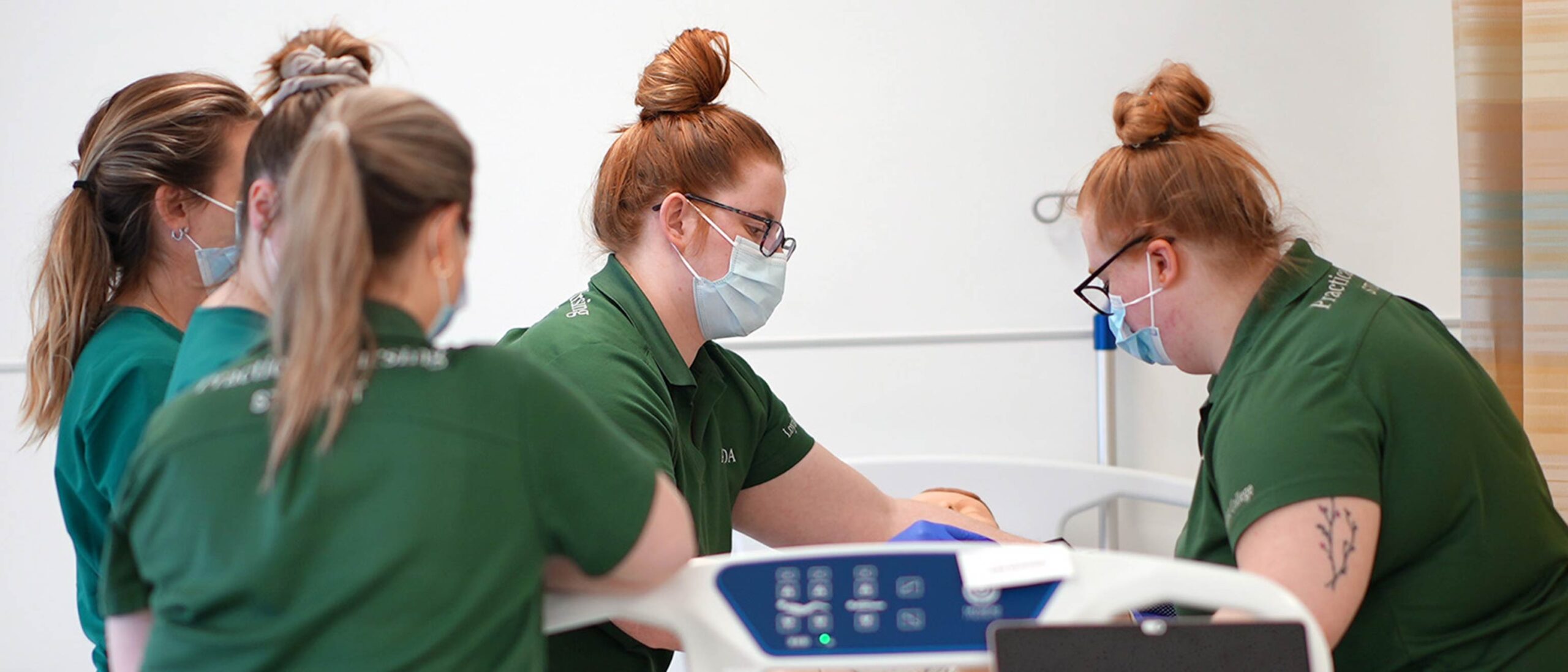
  • You’ll learn through interactive classes, case‑based learning, hands‑on lab simulations, and applied research projects.
  • Courses are designed to help you understand Canadian healthcare standards while strengthening communication, critical thinking, advocacy, and interprofessional collaboration skills.

Courses

CHSN1000 Communication I: Professional Oral and Written Communication

In this course, students build essential oral and written communication skills for Canadian healthcare. Students explore professional terminology, refine their ability to convey complex medical information clearly and develop effective strategies for interacting with patients, families and interdisciplinary teams. Emphasis on cultural sensitivity, active listening and documentation standards promotes safe, patient-centered care.

CHSN1004 Ethical and Legal Issues in Canadian Healthcare

This course introduces students to the fundamental legal and ethical principles governing healthcare practice in Canada. Topics include patient rights, consent, confidentiality, privacy legislation, professional accountability and common ethical dilemmas in acute and critical care. Emphasis is placed on culturally responsive decision-making, client advocacy and navigating ethical challenges during transitions across healthcare settings. Students also explore documentation expectations and the legal significance of accurate records within the Canadian healthcare system.

CHSN1005 Intensive Lab Skills Level I

In this course, students apply foundational communication, consultation and documentation skills in simulated scenarios. Students practice culturally sensitive dialogue, patient interviewing, identification of client needs and strengths and interprofessional communication. Through realistic case studies, students engage in advocacy activities, coordinate information with healthcare team members and document interactions to support continuity and safety during transitions in care.

CHSN1002 Interprofessional Collaboration

In this course, students develop the skills and confidence to work effectively within interprofessional healthcare teams. Students explore professional roles and how to communicate and work together for the best patient care. Students practice giving and receiving feedback, using reflective frameworks to grow both personally and as team members. Students explore the Canadian Interprofessional Health Collaborative (CIHC) Competency Framework and also learn to identify client needs, participate in coordinated support planning and recognize how interprofessional collaboration enhances client transitions and outcomes.

CHSN1001 Introduction to the Canadian Healthcare System

This course offers an essential overview of the Canadian healthcare system. Students explore its foundational structure, legislation, governance, funding models and key service delivery components at both federal and provincial levels. Emphasis on understanding the roles of various healthcare providers, access to care and the unique challenges and strengths of the system builds contextual understanding for students. Students gain a comprehensive understanding of how healthcare is organized and delivered across Canada.

CHSN1003 Pathophysiology

In this course, students integrate knowledge in pathophysiological concepts and terminology, as well as pathophysiology of the skeletal, muscular, nervous and endocrine systems.

CHSN1006 Communication II: Critical Reasoning and Academic Writing

Students expand their academic reading, writing and critical thinking skills related to a variety of health topics. Students learn to locate, evaluate and synthesize evidence from professional databases to support decision-making, advocacy and collaborative practice. Emphasis is placed on developing clear, evidence-informed communication. Prerequisite: CHSN 1000

CHSN1010 Epidemiology and Public Health in Canada: Infectious Diseases and Vaccine Policies

In this course, students explore roles in community and public health, using the population health framework. Students evaluate principles of community assessment and development, program planning and other strategies that are supported through a population health perspective, with particular emphasis on social, political and economic determinants of health. Prerequisite: CHSN 1001

CHSN1009 Health Assessment

In this course, students explore and evaluate health assessment principles and practices within the Canadian context. Students further develop skills in understanding systematic health histories and interpreting findings relevant to Canadian clinical standards. Emphasis is placed on culturally sensitive assessment techniques, documentation and the use of appropriate diagnostic tools. Students gain proficiency in analyzing patient data, essential for effective clinical decision-making. Prerequisite: CHSN 1000, CHSN 1002, CHSN 1003

CHSN1007 Indigenous Health

Guided by the Truth and Reconciliation Commission of Canada's (TRC) Calls to Action on healthcare, students develop their practice to include meaningful and culturally appropriate ways to work collaboratively and appropriately with Indigenous populations within healthcare. Students develop strategies to apply this content in their educational study and future practice. Prerequisite: CHSN 1001

CHSN1011 Intensive Lab Skills Level II

In this intensive lab course, students have opportunities to integrate essential skills within simulated environments. Students explore health histories while applying culturally sensitive communication techniques in a simulated environment. Students demonstrate effective patient interaction, accurate data collection and interpretation of findings according to Canadian standards. Through immersive, practical scenarios, students assess patients and communicate effectively with individuals, families and interdisciplinary teams, promoting safe and integrated service navigation. Prerequisite: CHSN 1005

CHSN1008 Pharmacotherapeutics

In this course, students learn the principles of pharmacology within Canadian healthcare. Emphasis is placed on legal and ethical considerations, documentation of medication-related information and the role of pharmacotherapy in evidence-informed support planning. Through case scenarios, students assess client needs, coordinate care and integrate medication considerations into transition-of-care planning. Prerequisite: CHSN 1003

CHSN2005 Care of Patients with a Critical Cardiovascular Illness

Students gain knowledge related to assessment and management of cardiovascular emergencies in Canadian critical care. Students analyze client needs, interpret clinical data and integrate evidence-informed interventions into collaborative support plans. Emphasis is placed on communication with patients, families and interprofessional teams, navigating ethical considerations and coordinating transitions across acute and community settings. Prerequisite: CHSN 1006, CHSN 1007, CHSN 1008, CHSN 1009, CHSN 1011

CHSN2002 Care of Patients with a Critical Neurological Illness

In this course, students examine assessment, monitoring and evidence-informed management strategies for neurological emergencies in Canadian critical care. Students explore how to interact with patients and families to identify needs, communicate complex information and plan supports across care settings. Prerequisite: CHSN 1006, CHSN 1007, CHSN 1008, CHSN 1009, CHSN 1011

CHSN2004 Critical Care Intensive Lab Skills Level I

Students apply theoretical knowledge of neuro- and cardiovascular critical care in simulated clinical environments. Students practice advanced assessment, monitoring, client consultation and interprofessional communication. Emphasis is placed on culturally responsive practice, advocacy, documentation and coordinating support strategies that promote safe transitions across critical care settings. Prerequisite: CHSN 1011 Co-requisite: CHSN 2001, CHSN 2002, CHSN 2003, CHSN 2005

CHSN2003 Electrocardiogram (ECG) Interpretation

Students build enhanced knowledge and practical skills in ECG interpretation to support decision-making in diverse healthcare settings. Learners analyze ECG rhythms, identify abnormalities and correlate findings with patient presentation. Emphasis is placed on communicating clinical findings to interprofessional teams, documenting rhythm interpretations and incorporating ECG data into collaborative care planning and transition-of-care strategies. Prerequisite: CHSN 1006, CHSN 1007, CHSN 1008, CHSN 1009, CHSN 1011

CHSN2001 Fundamentals of Critical Care Services in Canada

Students examine the structure, function and team dynamics of critical care services in Canada. Topics include the roles of interprofessional team members, culturally responsive client consultation and ethical considerations in critical care. Students explore how acute conditions influence support needs and they analyze how care is coordinated during transitions into, within and out of critical care environments. Prerequisite: CHSN 1006, CHSN 1007, CHSN 1008, CHSN 1009, CHSN 1011

CHSN2000 Independent Research I

Students complete the first phase of an independent research project within the Canadian healthcare context. Students identify a problem related to critical care healthcare navigation, access, quality or transitions of care. They formulate research questions, conduct systematic literature reviews and apply ethical considerations relevant to diverse populations. Emphasis is placed on critically appraising evidence, understanding system-level implications and proposing research that may inform improved collaboration, advocacy or client support planning. Prerequisite: CHSN 1004, CHSN 1006, CHSN 1007, CHSN 1008, CHSN 1009, CHSN 1010, CHSN 1011

CHSN2009 Care of Patients with a Critical Endocrine, Gastrointestinal or Genitourinary Illness

Students examine complex endocrine, GI and GU emergencies in Canadian critical care. Learners assess patient needs, interpret clinical findings and develop evidence-informed strategies to support clients with multi-system illness. Emphasis is placed on advocacy, culturally sensitive consultation, documentation and collaborating with interprofessional teams to ensure continuity and safe transitions in care. Prerequisite: CHSN 2001

CHSN2008 Care of Patients with a Critical Respiratory Illness

Students explore advanced knowledge of respiratory emergencies and critical care management within the Canadian context. Students assess client needs, integrate evidence-informed interventions and develop coordinated support plans in collaboration with interprofessional teams. Emphasis is placed on culturally responsive consultation, ethical considerations, documentation and planning for safe transitions across healthcare environments. Prerequisite: CHSN 2001

CHSN2011 Critical Care Intensive Lab Skills Level II

Students apply knowledge from across the program in advanced multi-system critical care simulations. Students consult with clients and families, develop evidence-informed support plans, advocate for client needs and collaborate with interprofessional teams. Emphasis is placed on accurate documentation, culturally responsive practice and effective communication strategies that ensure safe and coordinated transitions across healthcare environments. Prerequisite: CHSN 2004 Co-requisite: CHSN 2008, CHSN 2009, CHSN 2010

CHSN2006 Independent Research II

Students complete and present their independent research project, analyzing data and communicating findings relevant to Canadian healthcare. Emphasis is placed on ethical conduct, dissemination of results and articulating implications for client advocacy, service coordination and system-level improvement. Students produce a professional research report suitable for presentation or publication. Prerequisite: CHSN 2000

CHSN2007 Leadership In Healthcare in Canada

Students explore leadership practices that support effective teamwork, client-centred navigation and system improvement within Canadian healthcare environments. Topics include leadership styles, change processes, advocacy, communication strategies and facilitating interprofessional collaboration. Prerequisite: CHSN 2001

CHSN2010 Palliative Care in Canada

Students explore principles and practices of palliative care within the Canadian healthcare system. Topics include symptom management, psychosocial and spiritual support, culturally grounded communication and ethical considerations at end of life. Emphasis is placed on advocacy, interprofessional collaboration, client and family consultation, documentation and supporting transitions between care settings. Prerequisite: CHSN 2001

*Courses subject to change.

Course information

Please note that the program of study details for this program are currently under review. Please check back to this page for updates.

A person in scrubs pushes a woman with grey hair in a wheelchair. Green graphic circles are in the lower lefthand corner of the image.

Admission Requirements

Required academic preparation  

  • Completion of a post-secondary diploma, advanced diploma, or degree in the health sciences fields.

International students

Learn more about admission requirements for international applicants and how to apply.

This program may be PGWP-eligible. Learn more and explore Loyalist’s PGWP-aligned programs.


Costs

Approximate costs (2025 – 26, two semesters at full-time student status)* 

  • International Tuition: $15,900 
  • Full-Time Ancillary Fees: $1,595.26 
  • Mandatory Health Insurance: $659 
  • Total: $17,254.26
  • Additional Program Costs: Approximately $200 – $250 

Additional student-purchased costs may include textbooks, supplies, software, and other resources. Additional expenses related to off-campus experiential learning activities may also be incurred.


Further studies

Pathways and university transfer

What’s next? Build on the knowledge and skills you learned at Loyalist by continuing your academic journey. Return to Loyalist to complete a second diploma or a post-graduate program in as little as a year, or receive credit recognition for your Loyalist studies when pursuing a degree at a university. Explore pathway opportunities.