
Tsi Titewaya’taró:roks: Inside Loyalist College’s new Indigenous Centre
Step into the new Tsi Titewaya’taró:roks Indigenous Centre at Loyalist College and you are greeted by friendly faces, natural light and a calm, open atmosphere.
For Dr. Jennifer Tewathahá:kwa Maracle, Loyalist’s Executive Director of Indigenous Engagement and Applied Research, that welcoming feeling is exactly the point.
“Everything was done with purpose and intention,” she says. “We wanted this to feel like a place where students immediately feel like they belong.”
That feeling begins with the name itself: Tsi Titewaya’taró:roks. Translated as “the place where we gather as family,” it emerged from sharing circles with Indigenous students who reflected on what the Indigenous Centre means to them. Through those conversations, one idea returned repeatedly — the feeling of family.
“Family means something different to us as Indigenous People,” Dr. Maracle explains. “It goes beyond a blood tie. It includes the people who make us feel safe and supported.” Referring to someone as “Auntie” or “Uncle,” she explains, is not casual language, but a way of recognizing the gift of caring.
Students also suggested the name be expressed in Kanyen’kéha (Mohawk), the language of the closest Indigenous community to the college. In the Mohawk language, Dr. Maracle explains, meaning is carried through action. “We use nouns and verbs differently than in English. Rather than naming something with a noun, we describe what it does.”
The college community marked the official opening of the newly renovated Tsi Titewaya’taró:roks as part of its Truth and Reconciliation Week activities, which took place from Sept. 29 – Oct. 3.
The opening introduced guests to warm central area laid out like a home, with a kitchen, dining area and living room – a design rooted in the same sense of family and relationality reflected in the Centre’s name.
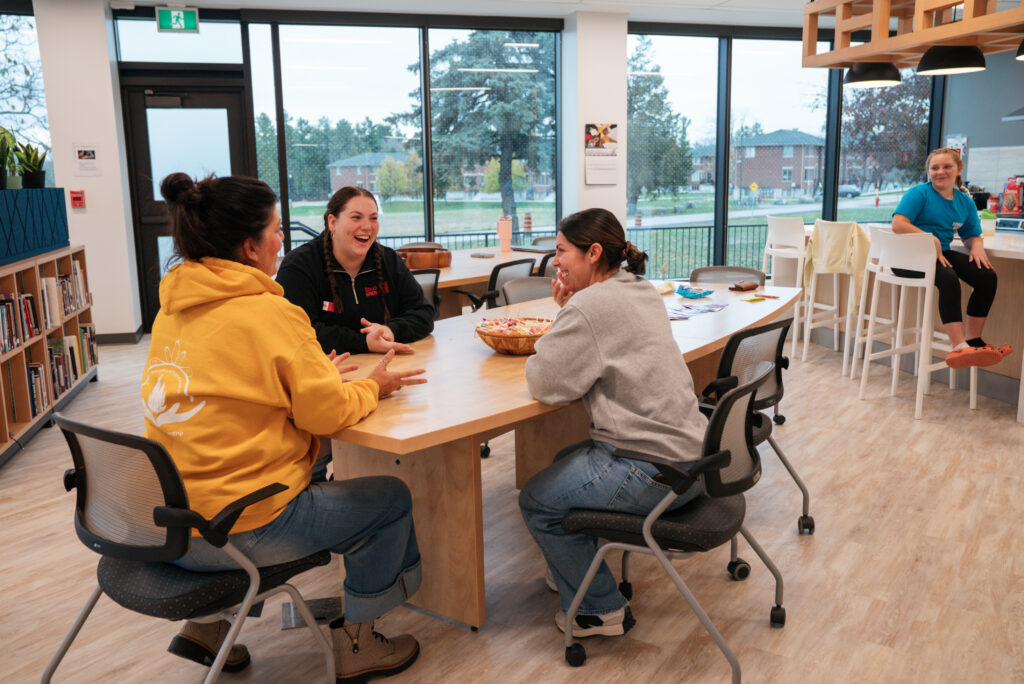
Dr. Maracle highlights the importance of the kitchen as the heart of the home in Indigenous households. “Food is a medicine,” she explains. “Sharing food with friends and family is a ceremony in itself.”
This meant a large communal table was essential to the design — one that everyone could sit at together.
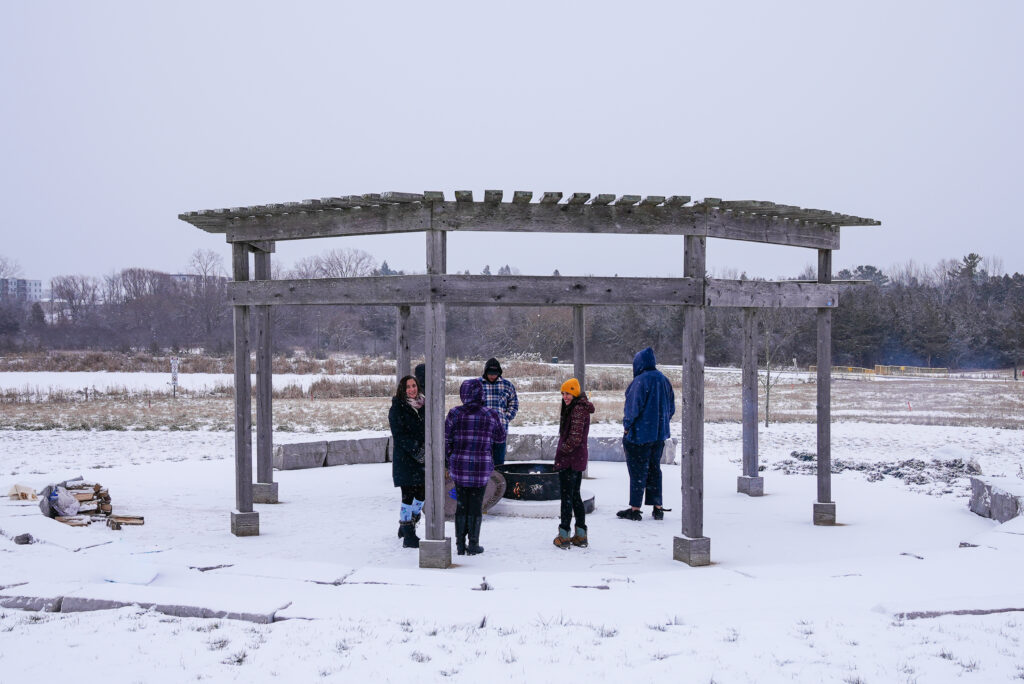
Connection to the land was also central to the design. Clear views of the outdoors offer daily reminders of the shared responsibility to all living things. A door leading outside to the nearby A’nó:wara Learning Circle gives students and staff easy access to fresh air and grounding between classes. Plans for a medicine garden will further strengthen those connections.
The experience of walking into Tsi Titewaya’taró:roks matters as much as its design, especially for students who feel unsure about stepping inside.
“Because of colonization, some Indigenous students feel like they’re ‘not Indigenous enough,’ or worry they won’t be accepted,” Dr. Maracle says. “I would say: come in. You are welcome. Would you like some tea?”
“But in all seriousness,” she adds, “If a student isn’t sure whether they want to self-identify or take part in activities right away, we always encourage them to reach out to us for a conversation. We’re here to support students wherever they are on their journey.”
Today, the Tsi Titewaya’taró:roks space reflects exactly what students described in their sharing circles: a home-away-from-home woven into campus life.
Submit a Story Idea
Your story is part of what makes our community extraordinary. From hands-on learning innovations to life-changing partnerships, the moments that unfold at Loyalist deserve to be celebrated.
Have an inspiring achievement, classroom breakthrough, or community collaboration to share? Submit your story idea below and help us showcase how small gives us the power to do BIG things every day.
Related News

Building a Creative Community: Wendy May Recognized by Quinte Arts Council

“Success doesn’t have an expiration date:” How one Loyalist nursing student is rewriting her story