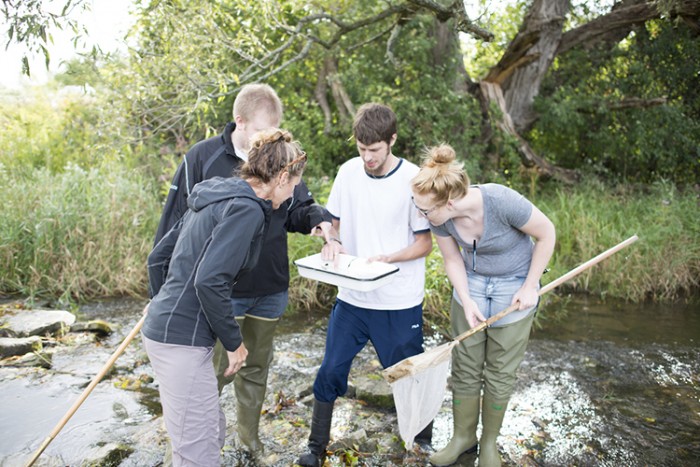
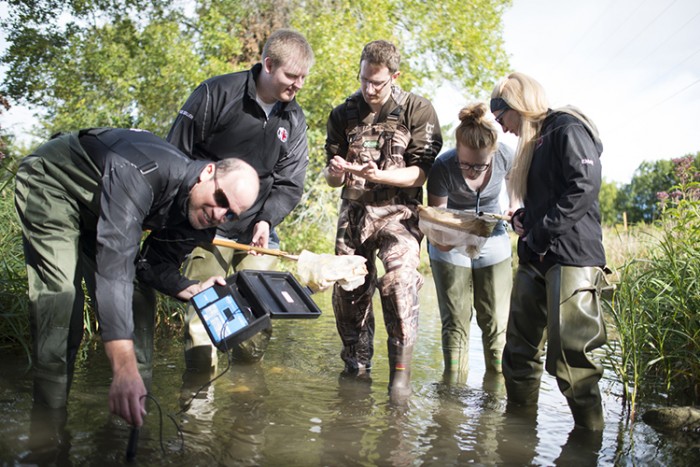
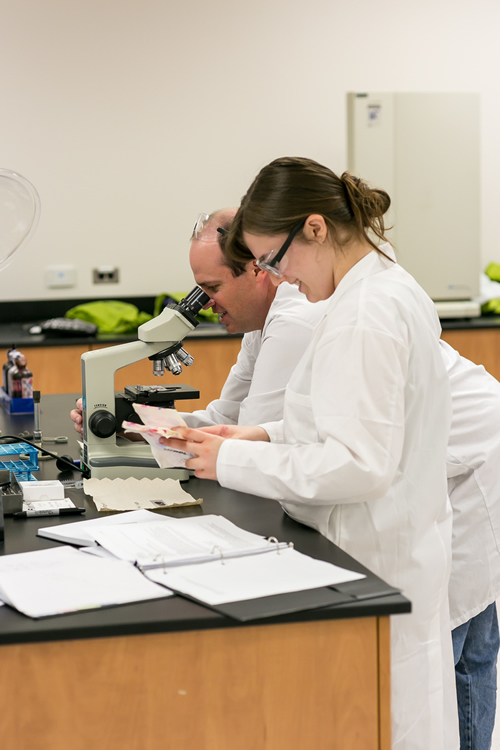
We share one planet. Bioremediation techniques can restore contaminated environments and reclaim them for farmland, wildlife habitats and the earth’s increasing population. Choose a career where you can make an impact.
Find your career
Everyone’s going green and there have never been so many opportunities to combat environmental contamination through prevention, pollution abatement, waste reduction and public education. Graduates find opportunities:
- Working within industries to reduce and clean up waste.
- Conducting environmental investigations and enforcement for government agencies.
- Monitoring water and wastewater treatment and safe drinking water for municipalities.
- Providing technical support to consulting engineers, urban and rural planners and environmental consultants.
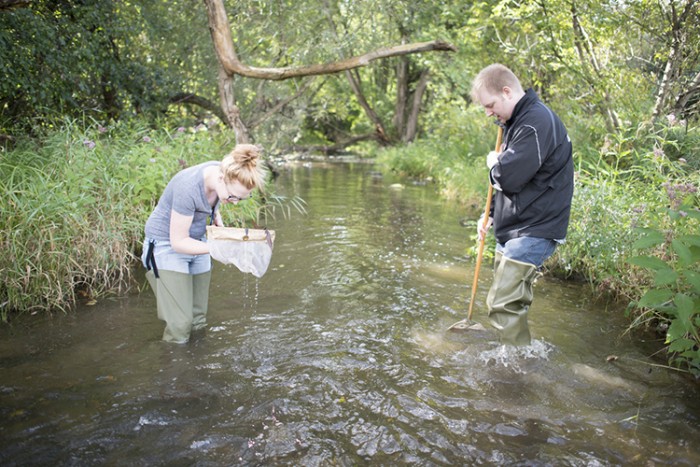
- Students acquire skills in assessment of freshwater bodies using Ontario stream assessment protocols (OSAP and OBBN).
- Grads are prepared for certification in the Ministry of the Environment’s entry-level course for drinking water operators.
- Average starting salaries range from $35,000 to $44,999.*
*Source: Employment Profile Provincial Report, Ministry of Training, Colleges and Universities.
Our grads get great jobs
- Environmental Technician, Atomic Energy of Canada Ltd.
- Soil Tester, Matrix Solutions
- Environmental Lab Technician, SGS Canada
- Water and Sewer Plant Operator, Prince Edward County
- Environmental Technologist, The Greer Galloway Group Inc.
- Relief Wastewater Treatment Plant Operator, Town of Smiths Falls
Is it for you?
Students who thrive in this program:
- Are passionate about the environment.
- Have strong skills in math and science.
- Enjoy working outdoors.
Experiential learning
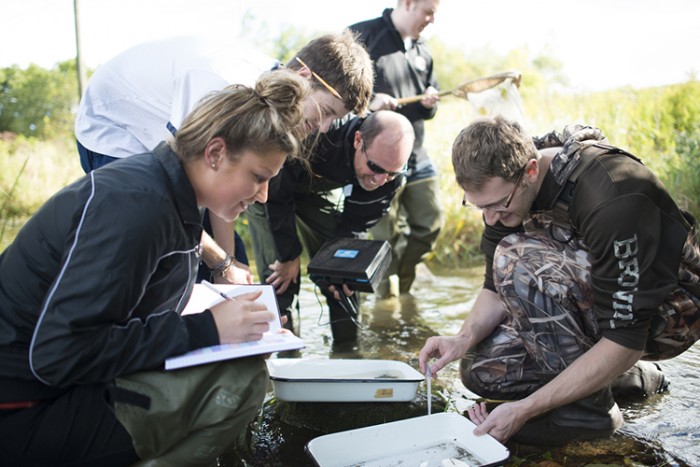
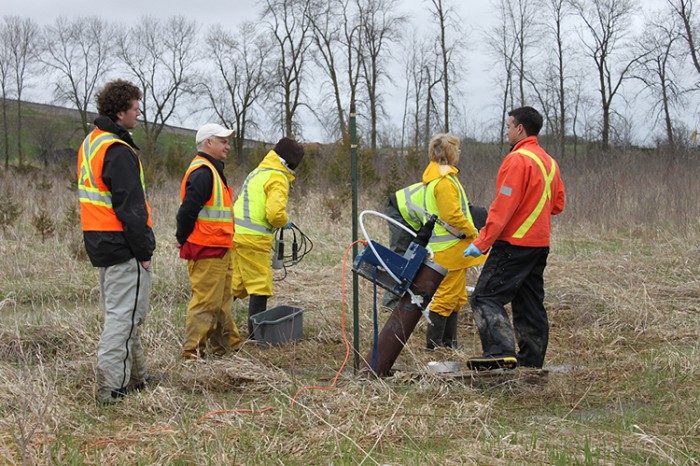
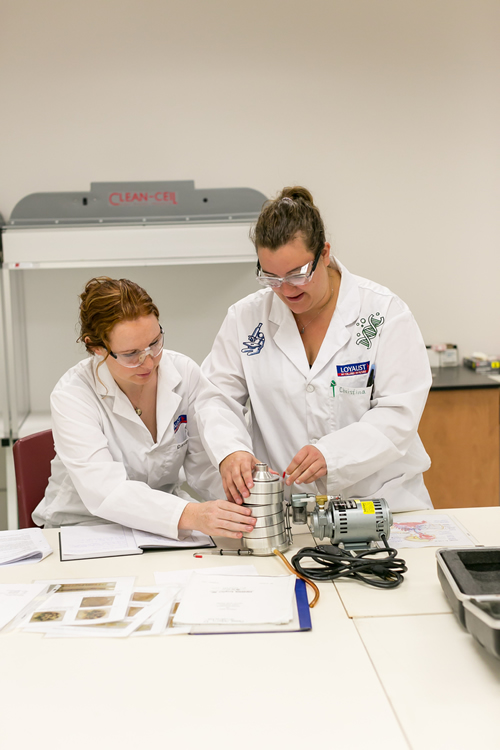
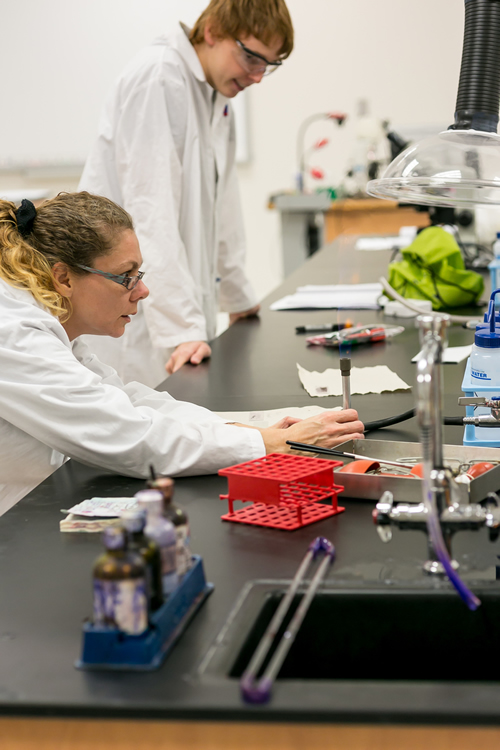
Prepare to get your hands dirty! Loyalist offers real-world learning for real-world problems — featuring extensive fieldwork and instruction with technologies of the future in the newly equipped Bay of Quinte Skills Centre:
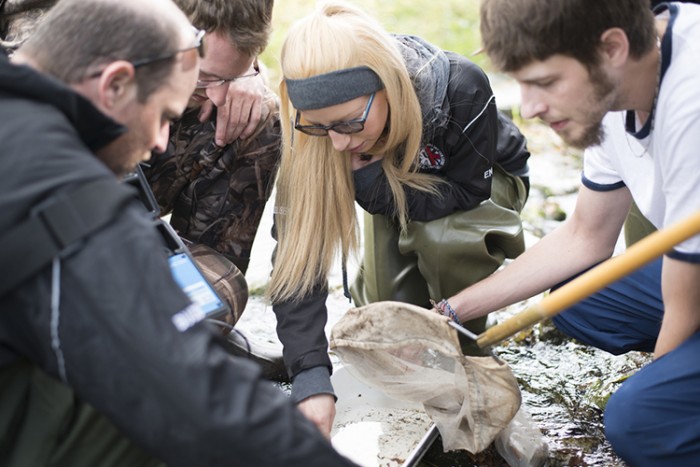
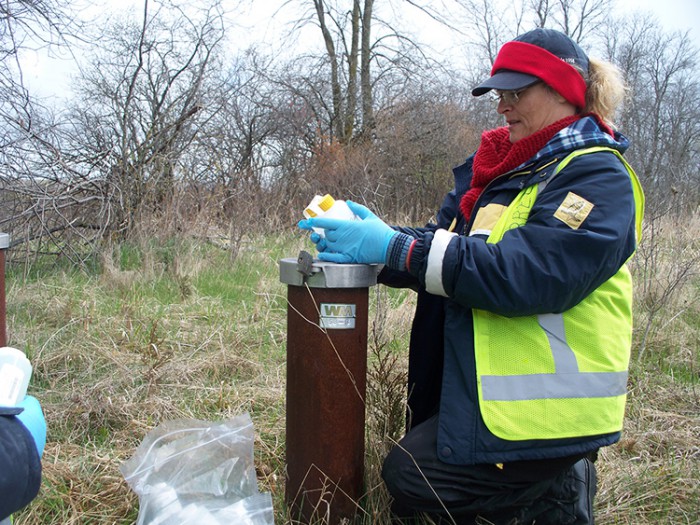
- Sample natural environments and analyze environmental contaminants.
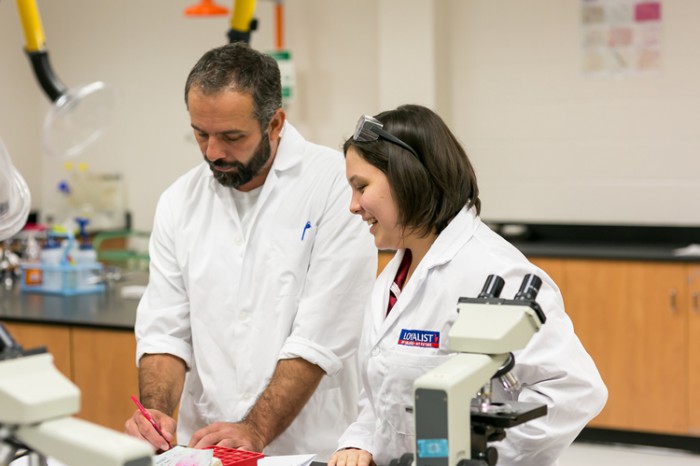
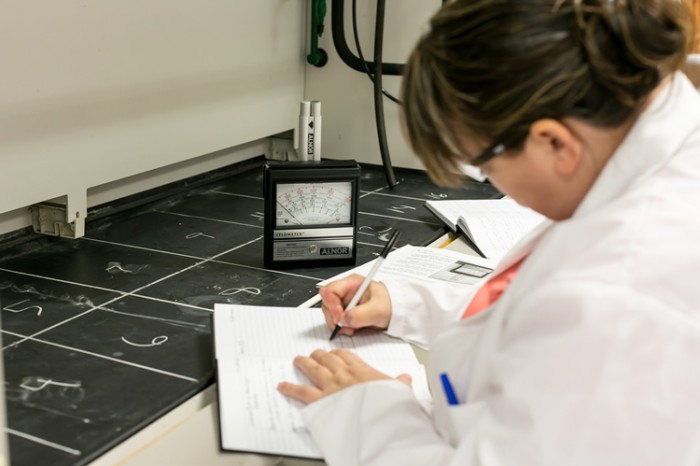
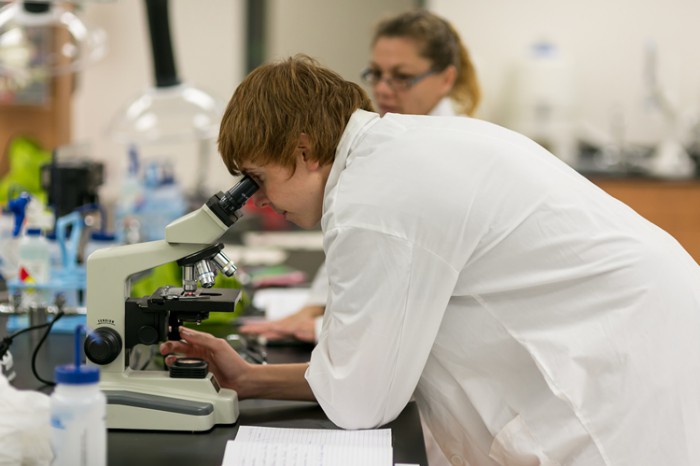
- Get hands-on experience in leading-edge environmental facilities, including well-equipped Field Biology and Instrumentation labs.
- Understand the underlying social systems that contribute to pollutants in water, soil and air.
- Learn to apply current legislation under the Environmental Protection Act.
- Applied project learning and field placements in the second and third years provide practical experience, preparing you for a smooth transition to the workforce with a wide range of skills.
Outstanding faculty make the difference
- Learn with active, involved instructors who are committed to students’ success.
- The teaching labs were set up by a program coordinator who brings 15 years of experience as a research geneticist working in three different countries.
Expand your opportunities in Biosciences
AccessAbility Services
The AccessAbility Services team is committed to providing academic supports to students with documented disabilities. Services are free, voluntary and confidential. Given that each student’s needs are unique, services and accommodations in the academic setting are arranged on an individual basis and based on the student’s supporting documentation. Click here for a list of some of the services provided by AccessAbility Services. To register with AccessAbility Services, please complete the AccessAbility Services Application.
- First Year - Semester One
- BIOS1013 Cell Biology Lab
-
This is an introductory course focusing on the topics of cell structure and function, the flow of energy in cells, and the exchange of information in and between cells. Basic biological laboratory exercises augment theoretical material.
Co-requisite: BIOS 1012
- BIOS1012 Cell Biology Lecture
-
This is an introductory course focusing on the topics of cell structure and function, the flow of energy in cells, and the exchange of information in and between cells.
Co-requisite: BIOS 1013
- COMM1068 Communications
-
This course introduces students to essential language skills to communicate clearly, concisely and correctly in written, spoken and visual form that fulfills the purpose and meets the needs of the audiences. Students reframe information, ideas and concepts using narrative, visual and symbolic representations, which demonstrate understanding.
- CHEM1019 Introduction to Applied Chemistry-Lab
-
The first of two introductory laboratory classes for chemistry. This course aims to provide students with the foundational laboratory skills required to safely and efficiently work in a laboratory setting. The course will examine the proper use of simple laboratory equipment, interpreting results through mathematical calculations, and making proper laboratory observations. Laboratory exercises provide students with practical knowledge of general lab safety and standard laboratory procedures.
- CHEM1018 Introduction to Applied Chemistry-Lecture
-
The first of two, this introductory chemistry course examines atomic structure, the names of the elements and their symbols, the IUPAC and common systems of nomenclature for inorganic compounds and ions, molecular weight, mole and solution concentration calculations, chemical reactions and equations. Laboratory exercises supplement the course material to provide students with practical knowledge of general lab safety and standard laboratory procedures.
- MATH1003 Mathematics for Biosciences 1
-
Students learn about the engineering and scientific applications involving the following areas: the SI system for dealing with exact and approximate numbers, exponents, solving equations, determinants and linear equations, curve sketching, graphing and trigonometry.
- BIOS1010 Sustainability
-
This course focuses on understanding climate and climate change, investigating the implications of climate change, the societal and environmental impacts of a changing climate, and geoengineering solutions. Students learn about sustainability as it relates to conserving water resources, food supply, and energy production.
- First Year - Semester Two
- CHEM1016 Applied Chemistry 2-Lab
-
This course provides practical exercises to support Applied Chemistry 2 theory.
Prerequisite: CHEM 1018, CHEM 1019, MATH 1003
Co-requisite: CHEM 1015
- CHEM1015 Applied Chemistry 2-Lecture
-
Students learn principles of acids and bases, gases, chemical equilibrium, and stoichiometry. Emphasis is placed on the chemistry as it relates to disciplines within the Biosciences. This is a companion course for Applied Chemistry 2 Lab
Prerequisite: CHEM 1018, CHEM 1019, MATH 1003
Co-requisite: CHEM 1016
- CHEM1013 Applied Organic Chem Techniques
-
This course is designed as a continuation of introductory Organic Chemistry. Students learn nomenclature, structure, and physical and chemical properties of major groups of organic compounds, and differentiate among types of chemical reactions involving organic compounds. Emphasis is placed on the practical applications of organic chemistry to the biosciences and engineering. Lab exercises complement the theoretical components of the course.
Prerequisite: CHEM 1018, CHEM 1019
Co-requisite: CHEM 1017
- BIOS1001 Introduction to Microbiology
-
This course introduces microbiological theory, specifically addressing the fundamentals of microbiology, bacterial structure and function relationships, as well as technical processes to manage microbial growth, nutrition and infection. The principal divisions of the field are discussed in this course, including their relationship to biotechnological, chemical and environmental interests.
- CHEM1017 Introduction to Organic Compounds
-
This course is designed as an introduction to organic chemistry, with a focus on i) molecular structure of the major classes of organic molecules, ii) IUPAC nomenclature, iii) physical and chemical properties, and iv) key chemical reactions. Learners will develop a foundation for understanding the interactions between organic compounds, and both biological and ecological systems. Throughout, emphasis will be placed on the practical applications of organic chemistry to such environmental disciplines as water treatment and toxicology.
Co-requisite: CHEM 1013
- MATH1004 Mathematics for Biosciences 2
-
This course focuses on engineering and scientific applications involving properties of exponents, logarithms and special graphing techniques. Microsoft Excel will be used.
Prerequisite: MATH 1003
- BIOS1002 Organismal Biology & Taxonomy
-
The relationship between structure and function is a fundamental principle of biology. This course in organismal biology emphasizes principles of anatomy and physiology of plants and animals within the context of problems that organisms must solve, including sensory perception and response to the environment, acquisition of oxygen and nutrients, excretion of wastes, movement, and reproduction.
Prerequisite: BIOS 1012, BIOS 1013
- BIOS1007 Technical Communications in Biosciences
-
This course is designed to: 1) raise awareness and interest regarding the place of science in everyday life, by exploring current local and global topics affecting life on Earth, and science's place in bringing these issues to our awareness; 2) develop sound critical thinking skills through exposure to the scientific method and experimental design; 3) apply transferable skills fundamental to scientific research and communication, and 4) learn of career opportunities in science through exposure to careers of current biosciences professors and local industry leaders.
- GNED1100 Becoming a Global Changemaker
-
This Loyalist College graduate attributes course will help shape your perspectives, broaden your understanding of important issues affecting our societies today, and equip you with invaluable knowledge and skills that will inform your ability to influence your community in a meaningful and impactful way. By exploring topics such as cultural competency, Indigenous education, entrepreneurship, sustainability, health and wellness, and ecological literacy, you'll be equipped with a powerful toolkit that extends far beyond the classroom.
- Second Year - Semester Three
- MATH2002 Data Analysis 1
-
This course focuses on measures of central tendency, measures of variation, frequency distributions, linear regression and the normal distribution. Microsoft Excel is used to generate statistical reports and graphs.
Prerequisite: MATH 1004
- ENVR2011 Environmental Chemical Analysis
-
This course is designed to investigate the fundamentals of analytical methods for sample preparation and analysis of liquid and solid environmental samples. Aspects of chain of custody and quality assurance and control are emphasized.
Prerequisite: CHEM 1015, CHEM 1016, MATH 1004
- BIOS2008 Habitat Management and Assessment
-
Field Biology provides and introduction to the theory of sampling procedures with practical experience in obtaining samples of both plant and animal, terrestrial and aquatic communities. Identification skills are stressed and elementary data processing introduced.
Prerequisite: BIOS 1002, MATH 1004
- ENVR2000 Hydrology and Watershed Management
-
Hydrometric procedures including streamflow measurements, river-stage measurements, rating curves and weirs are discussed and observed. Basic meteorology is also introduced.
Prerequisite: MATH 1004
- ENVR3004 Introduction to Geomatics
-
The student is introduced to the various Geomatics products, services and methodologies available to assist environmentalists in researching, delineating and mediating environmental issues: topographic surveying and mapping; topographic survey plans creation using AutoCAD; terrain representation & contour interpretation; Global Positioning Systems (GPS); aerial photography; LiDAR (Light Ranging & Detection); satellite imagery.
Prerequisite: MATH 1004
- BIOS2000 Microbiology
-
This applied biology course provides an introduction to microbiological theory and skills: specifically addressing microscopy, staining methods, cultivation of microorganisms, control of microbial growth, enumeration, water sanitary analysis and industrial application.
Prerequisite: BIOS 1001
- GNED General Education Elective
- General Education Courses
- Second Year - Semester Four
- ENVR2010 Environmental Instrumentation
-
Laboratory exercises in this course emphasize chromatography gas (GC), liquid (HPLC) and ion (IC), spectroscopy (in the ultraviolet (UV) Infrared and visible regions, and Flame and Furnace Atomic Absorption (AA). Sample preparation such as digestion, dilution, filtration, and extraction is performed.
Prerequisite: ENVR 2011
- ENVR2008 Environmental Protection Legislation
-
This course surveys Canadian environmental protection legislation addressing air quality, water quality, waste management, site decommissioning, noise, vibration, PCBs and asbestos. Legislation enforcement, environmental fate, audits, risk assessment and emergency planning are introduced, and ISO standards are discussed.
Prerequisite: BIOS 1007
- BIOS2014 Freshwater Ecology
-
Students study the biology and chemistry of fresh waters. Laboratory work supplements the theory.
Prerequisite: BIOS 2008
- ENVR2009 Hydrogeology and Sampling Methodology
-
This course deals with the geological occurrence of groundwater, principles of aquifers and the theory of groundwater movement.
Prerequisite: MATH 1004
- WKPL2089 Industry Research &Career Prep
-
This course will provide students with exposure to a broad scope of tools that can be used to achieve their career objectives. Scenarios are used to develop research techniques to identify job opportunities in a variety of related fields in private, research, contract, and government institutions reinforced with workshops and written assignments to create resumes and cover letters and practice job interviewing competency.
- ENVR2005 Waste Management
-
This course covers basic waste management theory and practice. Although there are many kinds of waste, this course aims broadly to address topics like the current waste crisis; source, composition and properties of waste; planning processes and waste management hierarchy; techniques and practices for the treatment and disposal of waste; and site remediation and/or restoration resulting from inappropriate waste handling.
Prerequisite: MATH 1004, CHEM 1013, CHEM 1015, CHEM 1016
- ENVR2006 Water/Wastewater Treatment
-
Through lectures, demonstrations, tours and labs, the student acquire knowledge of the processes and operations involved in the treatment of water for drinking and the treatment of sewage. If successful, students obtain the MOE Entry Level Drinking Water Operator Certification.
Prerequisite: ENVR 2011
- GNED General Education Elective
- General Education Courses
- Third Year - Semester Five
- ENVR3002 Air Sampling and Monitoring Techniques
-
This laboratory-oriented course introduces participants to the fundamental theories and mechanics of air sampling and monitoring for particulate, vapour and gaseous air pollutants.
Prerequisite: BIOS 2000, BIOS 2008, ENVR 2008, ENVR 2010, ( MATH 2002 or MATH 2012 ) , ENVR 2011
- MATH3000 Data Analysis 2
-
This is a course focuses on Inferential Statistics. Topics covered include the central limit theorem, discrete probability distributions, estimation (confidence intervals), chi-square distribution, analysis of variance. Microsoft Excel will be used to generate statistical reports and graphs.
Prerequisite: MATH 2002 or MATH 2012
- ENVR3011 Emerging Trends
-
Initiatives surrounding Climate Change, Renewable Energy and Sustainability, Biofuels and Bioproducts represent a selection of topics addressed in this course which challenges and investigates alternatives to our current systems.
Prerequisite: ENVR 2008
Co-requisite: ENVR 3012
- SURV3000 Geospatial and Environmental Analysis
-
This course introduces students in Civil Engineering Technology and Environmental Technology to the concepts, techniques and applications of geographic information systems. The focus is a fundamental understanding of data acquisition, mapping and spatial analysis. Practical examples related to transportation, environmental and geotechnical engineering will be provided to improve student learning and provide hands-on experience.
Prerequisite: MATH 1012 or MATH 1003
- ENVR3012 Resource Management
-
Resource Management provides an introduction to the theory of managing physical and biological natural resources. Planning for sustainability with regard to ecosystems, food resources, biodiversity, mineral resources, water/land/air use, human populations and energy will be addressed.
Prerequisite: ENVR 2008
Co-requisite: ENVR 3011
- ENVR3010 Toxicology
-
This course is an introduction to the study of the harmful interactions between chemicals and biological systems. Living things are exposed to a variety of toxic substances, ranging from metals and inorganic molecules to large complex organic molecules. Toxicology applies concepts of basic biochemistry, chemistry, pathology and physiology, along with experimental observation and analysis. Topics covered in this course include basic principles of toxicology, interaction of pollutants with natural systems, biological response to toxicants, ecotoxicology of pollutants, bioassay/biomonitoring techniques and exotoxicological decision making. Where possible, examples will be drawn from Ontario and the Great Lakes basin.
Prerequisite: BIOS 1012, BIOS 1013, CHEM 1013, CHEM 1015, CHEM 1016, ( MATH 2002 or MATH 2012 )
- Third Year - Semester Six
- ENVR3008 Applied Projects 1
-
Students in the third year of the Loyalist College Chemical Engineering and Environmental Technology programs will undertake semester-long, project-based learning with industry or community partners to participate in the development and execution of an applied project. The objective of the collaborative applied project is to have students, as team members in a workplace setting, apply and integrate the skill sets and knowledge that form the core of their training in these programs. In this way, students will augment their academic training with valuable work experience and have an opportunity to experience alternative methods of evaluation and measures of success that are less typical of academic environments.
Prerequisite: WKPL 2033
Co-requisite: ENVR 3009
- ENVR3009 Applied Projects 2
-
Students in the third year of the Loyalist College Chemical Engineering and Environmental Technology programs will undertake semester-long, project-based learning with industry or community partners to participate in the development and execution of an applied project. The objective of the collaborative applied project is to have students, as team members in a workplace setting, apply and integrate the skill sets and knowledge that form the core of their training in these programs. In this way, students will augment their academic training with valuable work experience and have an opportunity to experience alternative methods of evaluation and measures of success that are less typical of academic environments.
Prerequisite: WKPL 2033
Co-requisite: ENVR 3008
- ENVR3005 Environmental Assessment and Planning
-
This course introduces the basic principles of environmental planning in Ontario and Canada including: The Environmental Bill of Rights; The Canadian Environmental Assessment Act; The Ontario Environmental Assessment and Consultation Act; CSA Standard Environmental Site Assessments; Cleanup criteria for contaminated lands; Guidelines for Evaluating Environmental Liabilities for Land Transfers; Brownfield's and Urban Sprawl.
Prerequisite: ENVR 2008
*Courses subject to change.
What’s next?
Fast-track to a second diploma with just one additional year of study in:
Turn your diploma into a degree
Many universities across Canada and abroad will provide credit recognition for your diploma studies at Loyalist College. The following is a list of agreements that are currently in place. There are many more options, and new agreements are added annually. Contact your university of choice to make individual arrangements. Click here for more information about university transfer agreements.
Two or three-year diploma
- Algoma University – various*
- Athabasca University – Bachelor of Science
- Brock University – various*
- Cape Breton University – various*
- Carleton University – Bachelor of Science (Honours)
- Davenport University – B.A. in General Business
- Griffith University – various*
- Lakehead University – various*
- Lakeland College – Bachelor of Applied Science in Environmental Management
- Laurentian University – various*
- Laurier Brantford – any honours program
- Nipissing University – various*
- Royal Roads University – Bachelor of Science in Environmental Science or Environmental Management
- Ryerson University – various*
- Seneca College – Bach. Interdisciplinary Studies
- University of Guelph – Bachelor of Bio-Resource Management, Environmental Management
- Ontario Tech University – B.A. Adult Education and Digital Technology
- University of Waterloo – various*
- Western University – B.Sc. (Honours or General) Environmental Science
- Wilfrid Laurier University – various*
- York University – various*
- Atlantic Technological University - Year 3 BSc in Environmental Science with Ecology
Three-year diploma
- Queen's University – various*
- Royal Roads University – B.Sc. Environmental Practice; B.A. Environmental Practice
- Trent University – Bachelor of Science (Honours)
- University of Ontario Institute of Technology – Bachelor of Applied Science in Nuclear Power (Honours); Commerce Bridge
- University of Windsor – various*
- Atlantic Technological University - Year 4 BSc (Hon) in Environmental Science with Ecology
*Various potential degree pathways. Please confirm details with the receiving institution.
How much will it cost?
Approximate costs (2023 – 24)
- Domestic Tuition: $2,722.08
- Full-Time Ancillary Fees:* $1,308
- Total: $4,030.08
- Additional Program Costs: $1,516 (year one)
Additional costs, such as supplies, travel and parking, may be incurred during workplace visits, etc.
*Fees related to programs that are less than or greater than two semesters will be adjusted accordingly. Fees are subject to change. Please visit the Tuition and Fees web page for a list of the many services, activities and items included within the ancillary fees, and the related policies.
Bursaries and financial assistance
Loyalist has a number of scholarships, bursaries and academic awards available to students. Our Financial Aid Office can help you explore your options, or assist you with a student loan.
Admission requirements
Required academic preparation
- OSSD/OSSGD or equivalent with courses at the general, advanced, (C), (U) or (M) level, AND
- Grade 12 English (C) level or equivalent
OR
Recommended academic preparation
• Chemistry and Physics at the (C), (U) or general level.
• Applicants with a related degree or diploma may be considered for advanced standing or direct entry into second year.
Prior learning assessment and recognition
Applicants with work experiences or other types of non-credentialed learning may be eligible for credits at Loyalist. Graded credits (as opposed to exemptions) are granted. Click here for more information about our assessment and credit challenge process.
International students
Click here for information about how to apply, international student fees and more.
Campus News
LOYALIST COLLEGE INTRODUCES HORTICULTURE TECHNICIAN APPRENTICESHIP
 Opportunity for Apprentices to Cultivate Landscaping Careers in the Bay of Quinte RegionBelleville, Ontario, May 12, 2016 – Loyalist College has received approval from the Ministry of Training, Col... Read More
LOYALIST COLLEGE RECEIVES GRANT APPROVAL FOR APPLIED RESEARCH PROJECT ...
Belleville, Ontario, November 30, 2015 —Loyalist College is pleased to announce that it has partnered with The Canadian Bioceutical Corporation on an applied research project to be developed within ... Read More
Why Wait?
It may seem like the time is never quite perfect to start a new chapter in your life. But why wait? A journey of a thousand miles begins with a single step. Loyalist College offers a variety of progra... Read More
Why Loyalist College Was the Right Choice After University
By Candace Parsons, 2014 Loyalist Environmental Technician graduate
I am a first generation student — the first member of my family to gain a post-secondary education. I am a proud University of... Read More
Loyalist in Action for Earth Day College Students Lead Green Initiativ...
By Becky MacWhirter, Loyalist College Sustainability Coordinator
Over six million Canadians are expected to take part in Earth Day activities this year and Loyalist College students and staff are amo... Read More
In the News
Electrical Business
Cision
Water Canada
The Toronto Sun
Belleville Intelligencer